Passport Photo Size: Requirements Country by Country
Mexico's passport asks for 45 × 35 mm and under 30 days old. Spain sets 32 × 26 mm by law and the US a 2-inch square. Table and how to take it.
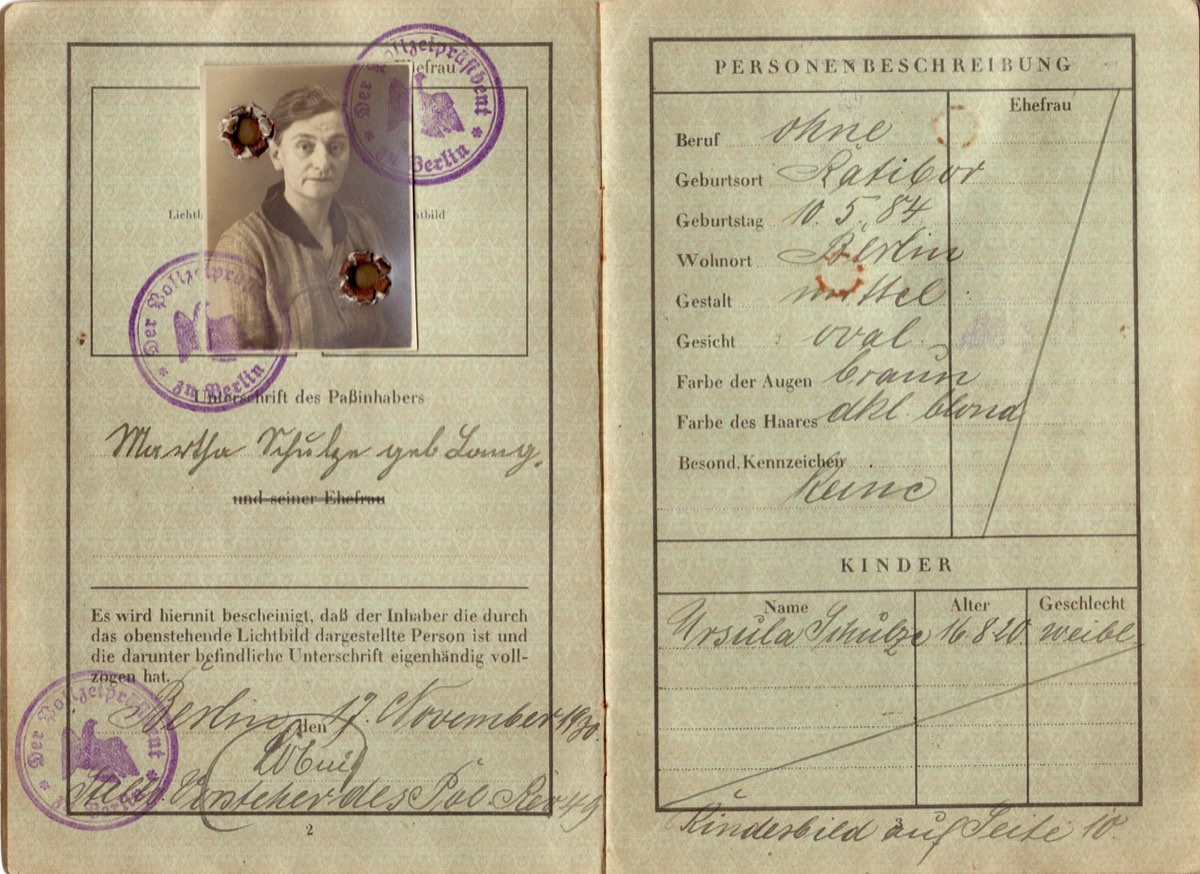
For the Mexican passport, the SRE (Mexico's foreign ministry) publishes 45 × 35 mm, white background, facing forward, no glasses, head uncovered, not smiling and taken less than 30 days ago. At 300 ppi that is 531 × 413 pixels. That is the answer if your application is Mexican and they ask for a printed photo.
And there is the first trap of this search: there is no universal size. Spain sets 32 × 26 mm by royal decree and the United States asks for a 2 × 2 inch square. A photo prepared for one passport is no good for the other, and the reason is more interesting than it seems.
Table: what each country asks for
Country: Mexico (passport); Size: 45 × 35 mm; Background: White; Maximum age: 30 days; Glasses: Not allowed; Who takes the photo: Increasingly, the authority
Country: Spain (national ID and passport); Size: 32 × 26 mm; Background: Plain, uniform white; Maximum age: Not set by the decree; Glasses: Allowed if not dark-lensed; Who takes the photo: Can be automated at the office
Country: US (passport); Size: 51 × 51 mm (2 × 2 in); Background: White or off-white; Maximum age: 6 months; Glasses: Not allowed; Who takes the photo: You provide it
Country: US (visa); Size: 51 × 51 mm (2 × 2 in); Background: White or off-white; Maximum age: 6 months; Glasses: Not allowed; Who takes the photo: You provide it
Country: Peru (electronic passport); Size: You do not hand in a photo; Background: —; Maximum age: —; Glasses: —; Who takes the photo: Immigration, at the agency
Watch out for an easily overlooked detail that causes rejections: the United States uses the same physical format for visa and passport, but a different head-height range. For the visa, the head must measure between 22 and 35 mm from chin to crown; for the passport, between 25 and 35 mm. A valid visa photo at the low end of its range does not meet the passport requirement.
Why is there no single size in the world?
Because the body that people think imposes it actually only recommends it.
ICAO (the UN's civil aviation agency) publishes the document that standardizes passports worldwide. And about the photo you hand in at the counter, it says, literally, that it "should" measure 45 × 35 mm. It is a recommendation, not an obligation, and the document itself delegates the matter: where the portrait is submitted to the issuing authority, you must follow the requirements that authority sets.
What ICAO does impose is something else: the photo already printed inside the passport, where the head must take up between 70 and 80% of the height of its zone. In other words, it standardizes the face inside the booklet, not the paper you take to the window.
Everything else follows from that. 45 × 35 mm is the most widespread in the world because it is the recommendation; Spain can depart from it by setting 32 × 26 mm by law and the United States can use a square, and neither of them breaks any rule.
A nuance worth keeping clear: the rules on glasses, veils and expression are not in that ICAO document. They are in an ISO standard that the document references. Saying "ICAO requires it" about glasses is, strictly speaking, inaccurate.
Mexico: 30 days, no glasses and no smiling
The Mexican specification is among the strictest in the world on one specific point: age of the photo. An official SRE PDF sums up the requirement in one line (white background, facing forward, not smiling, no glasses, full head, no more than 30 days old, 45 mm × 35 mm) and consulates ask for two identical photographs.
Thirty days. The United States accepts six months. If you have photos from a previous application stored in a drawer, they are no good for the Mexican passport.
But there is an important and current twist: they may not ask you for a photo at all. The list of requirements published for the passport application in Mexico does not mention a photograph, and for the consular application the SRE states that the photograph is taken right there (no glasses, head uncovered, facing forward) as part of biometric enrollment, along with fingerprints.
The practical reading: the 45 × 35 mm size is still valid where printed photos are still requested, and there are fewer and fewer such places. Confirm at your appointment before paying for copies that perhaps nobody will ask you for.
Spain: set by law, not by custom
Spain is the perfect counterexample to Mexico. Here no lab convention counts: the size is in the Official State Gazette (BOE).
The royal decree that regulates the national ID requires "a recent color photograph of the applicant's face, size 32 by 26 millimeters, with a uniform, plain white background, taken from the front, with the head completely uncovered and without dark-lensed glasses." The royal decree on the passport repeats the same size and almost the same words.
Note the nuance about glasses, because it differs from the American one: Spanish law prohibits dark lenses, not glasses. You can go in wearing your prescription glasses as long as they do not hide your eyes.
United States: the two-inch square
Exactly 51 × 51 mm, in color, on a white or off-white background with no shadows, on matte or glossy photo paper, and taken within the last six months.
Three specific rules cause most rejections:
Glasses are prohibited, with no exception except for a documented medical reason with a note signed by the doctor.
No uniform or clothing that looks like one, and no camouflage.
Retouching, filters and artificial intelligence are prohibited. It is written explicitly: the photo may not be modified with software, apps or AI. Photocopies or scans of a printed copy are also not accepted.
And one that surprises many people: smiling is allowed, as long as it is a natural smile with open eyes. It is exactly the opposite of the Mexican requirement.
For the digital application, the image must be a square JPEG, between 600 × 600 and 1200 × 1200 pixels, in 24-bit sRGB, and no larger than 240 kB.
How do I take a passport photo at home?
A window and a plain wall are enough:
Plain white background, with no texture, frames or shadows.
Stand the person one meter from the wall. It is the only thing that keeps their shadow from falling behind them.
Soft frontal light, a large window in front of the subject. No direct on-camera flash: it produces glare on glasses and a hard shadow around the outline.
Medium focal length, from about two meters. A full-frame equivalent of 85 mm gives natural proportions. A wide-angle at half a meter enlarges the nose, and it is the reason so many ID photos come out distorted.
Head straight, shoulders square, neutral expression, eyes open looking at the lens.
Shoot at maximum resolution and crop at the end, checking the head height the country asks for.
The exact pixel crop for each format is given by the document photo size calculator, and the rest of the lab sizes are in standard photo sizes. If you want to fine-tune your camera's equivalent focal length, the crop factor converter does the math.
Frequently asked questions
How many pixels is a passport-size photo?
At 300 ppi, the Mexican 45 × 35 mm is 531 × 413 pixels, and at 600 ppi it is 1063 × 827. The American 2 × 2 inch square is 600 × 600 pixels at 300 ppi, which matches the minimum required for the digital application.
Can I use the same photo for the Mexican passport and the American visa?
No. The proportions are incompatible: 45 × 35 mm is a rectangle and the American requirement is a 51 × 51 mm square with the face taking up between 50% and 69% of the height. You have to redo the framing; cropping is not enough.
Can you smile in a passport photo?
It depends on the country, and they are opposites. The SRE document expressly says "not smiling." The United States explicitly allows it, with a natural smile and open eyes. Check the requirement for your specific application before the shoot.
Is a photo I took a year ago acceptable?
Not for the Mexican passport: the requirement is 30 days. Not for the United States either, because the limit is six months. Age is one of the few requirements you cannot fix on the computer.
What to confirm before paying for printing
Two things, in this order. First, whether they will ask you for a printed photo, because in Mexico and in several countries in the region the authority already takes the photo during biometric enrollment. And second, the current size for your specific application on the official page, which is the only thing on this page that may have changed since you read it.
The 44 Enfogram cards come with lighting and framing diagrams printed in A4 and A5, so you can handle the shot without improvising in front of the subject.