Drones: Aerial Composition and Flight Checklist
Aerial drone photography: composition from the air, flight rules, key settings and a pre-flight checklist for safe results.
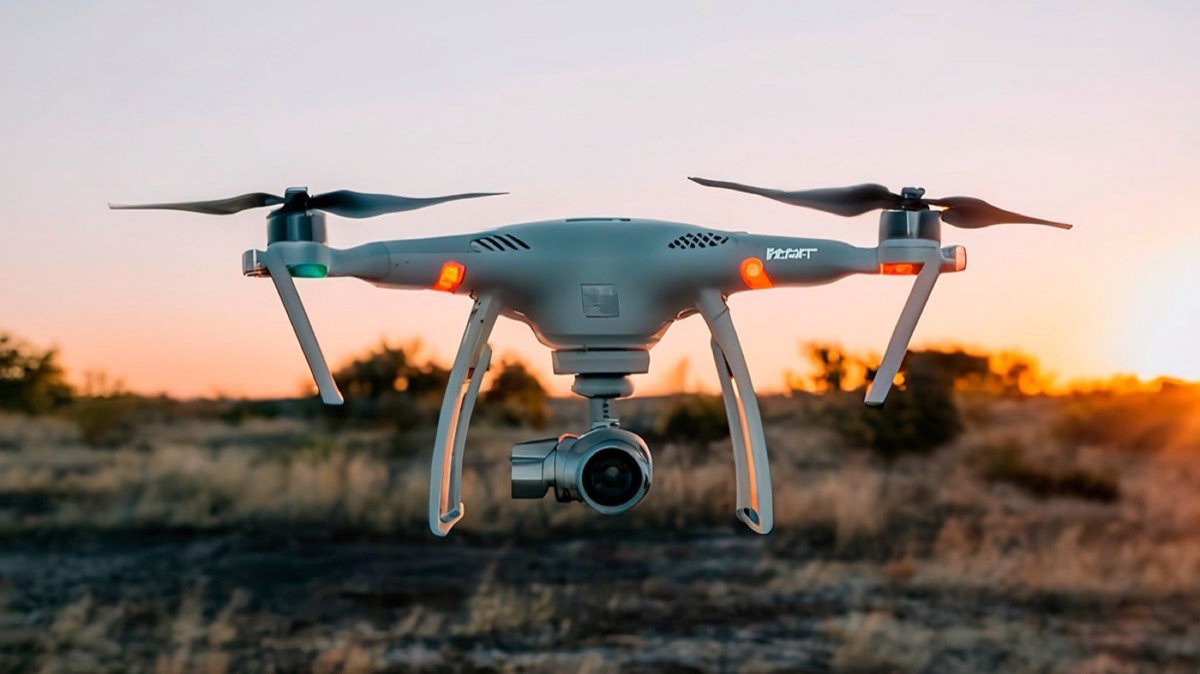
Aerial photography with drones opened up a visual universe that until a few years ago was reserved for helicopters and large productions. Today, a drone fits in a backpack and lets you discover unique perspectives, overhead shots that reveal geometries invisible from the ground and narratives that take any photographic or audiovisual project to a new level.
But flying for creative or professional purposes goes beyond lifting off and shooting. The difference between a spectacular shot and a disappointing one lies in planning, following the rules and a clear narrative purpose. Height alone tells no story.
What is a drone good for besides landscapes?
In aerial landscapes, the drone reveals geometric patterns, natural textures and scales that can only be perceived from height. Crop fields, waves breaking against the coast or desert dunes take on a visual force that is unmatched from the air.
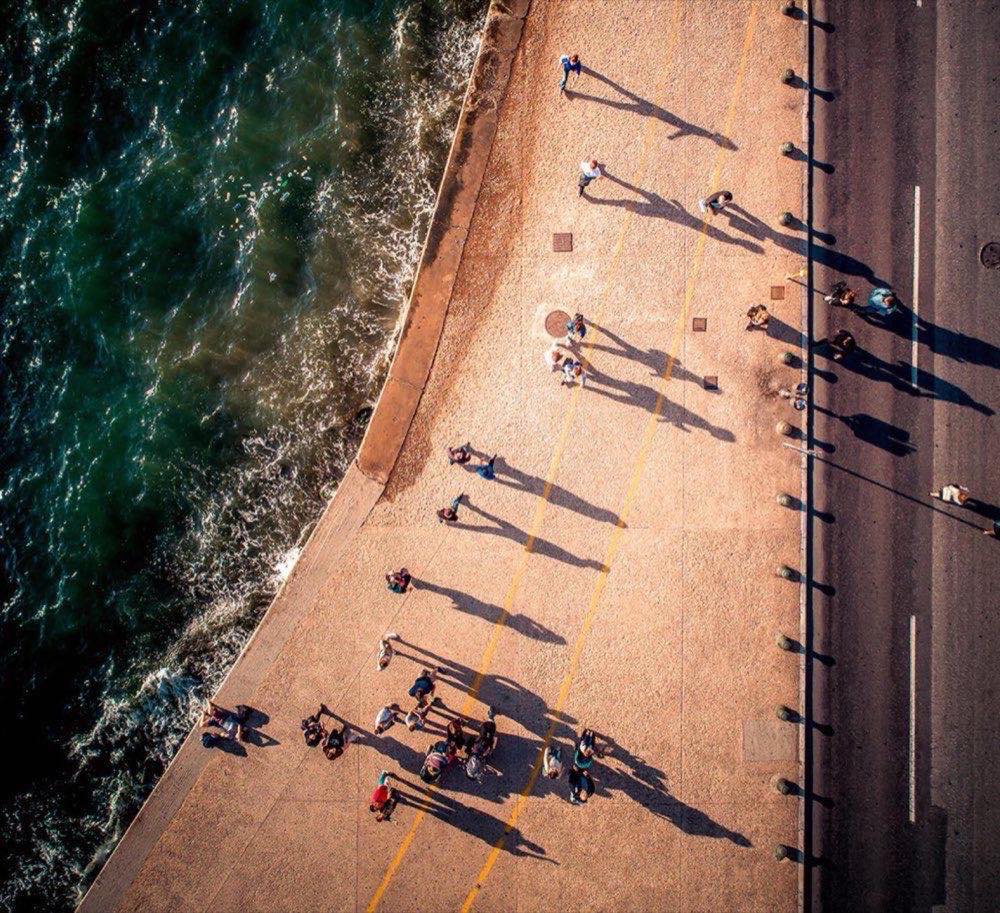
Overhead architecture takes advantage of the symmetry of streets, plazas or buildings. An angle perpendicular to the ground lets you appreciate urban order (or chaos) from an abstract perspective, turning the city into a graphic composition.
Dynamic tracking turns the drone into a moving camera: it accompanies runners, cars or cyclists with cinematic reveals that add energy to audiovisual narratives.
Technical applications count too: drones make it easier to document structures, roofs or risk zones, offering safety and precision without exposing people.
The principles of dynamic visual composition apply directly to aerial photography: leading lines, negative space and the rule of thirds work just as well at 80 meters up as at ground level.
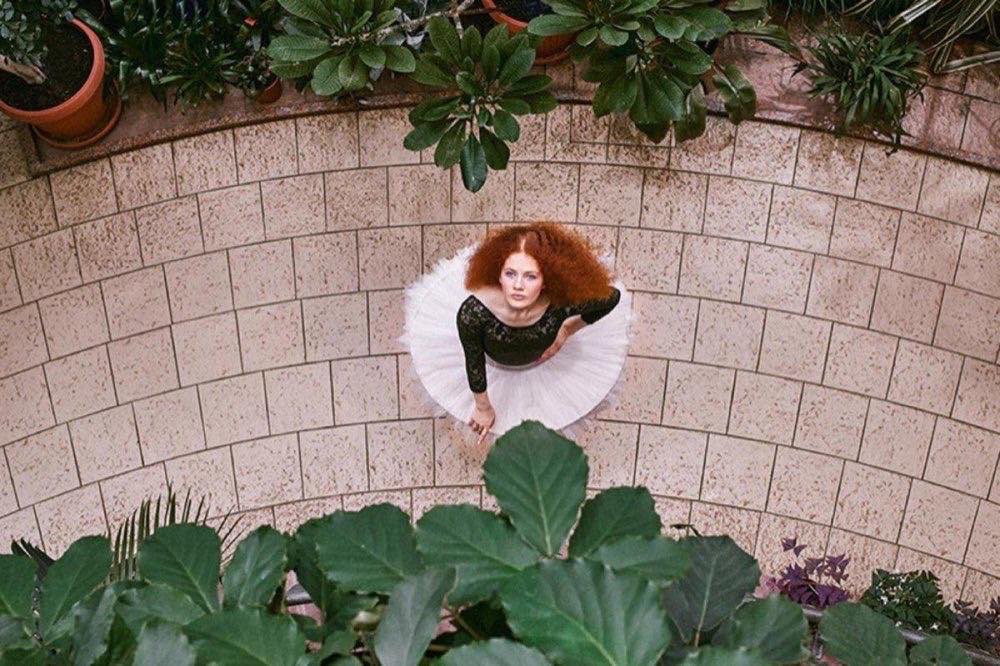
Which angle do I choose besides overhead?
The most common mistake in drone photography is overusing the fully overhead shot. While visually striking, repeating it in every project makes it predictable. Aerial composition has many more possibilities:
Low oblique shot (10–30°): combines sky and land, gives geographic context and scale.
Medium oblique shot (45°): balances spatial perspective with ground detail.
Overhead shot (90°): maximum abstraction, ideal for geometries, textures and patterns.
Reveal: the drone rises or moves forward, progressively revealing the landscape behind an obstacle.
Orbit: the drone circles a fixed point, showing 360° of the subject.
To choose the type of shot, the key question is: what do I want the viewer to discover with this shot?
What settings and flight limits do I need?
Every country sets a maximum legal altitude, in most cases 120 meters. Going beyond it means fines and, above all, risk to manned aircraft.
Safe conditions begin with the weather: avoid flying in wind above 15 km/h, rain or low visibility. A camera in manual mode with the histogram on and RAW lets you make the most of the dynamic range and ensure quality in editing.
Using flight apps and restriction maps such as geofences (a virtual perimeter surrounding a geographic location on a map), special permits and so on is mandatory to know where and how to fly legally. It also lets you plan routes and avoid setbacks in the field.
Recommended camera setup for drones
Parameter: Exposure mode; Recommendation: Manual; Reason: Avoids variations when changing angle
Parameter: ISO; Recommendation: As low as possible (100–200); Reason: Less noise in final images
Parameter: Shutter speed; Recommendation: 1/(frame rate × 2) (180° rule); Reason: Natural motion in video
Parameter: Aperture; Recommendation: f/4–f/8; Reason: Edge-to-edge sharpness
Parameter: Format; Recommendation: RAW or RAW+JPEG; Reason: Maximum flexibility in editing
Parameter: White balance; Recommendation: Fixed manual; Reason: Consistency between shots
Checklist before takeoff
Before taking off, always run through this pre-flight checklist:
Drone battery charged to 100%
Controller battery charged
GPS lock secured (minimum 8 satellites)
Compass calibration done (especially at a new location)
Home point marked and verified
Takeoff and landing zone clear of people and obstacles
Check of geofences and local airspace restrictions
Wind conditions verified (specialized weather app)
Propellers inspected, with no damage or play
Drone firmware updated
The guide to drone photography expands on each point of this list, and the habits of digital photography workflow work just as well for organizing and backing up flight files when you get back.
The four mistakes that cost you the drone
One of the most frequent is flying without checking local airspace restrictions, which can lead to severe fines. Another mistake is ignoring the weather: an unexpected gust can carry the drone off and end in total loss.
On the creative side, a common mistake is composing only from above, with no narrative purpose. An overhead shot draws attention once; if it doesn't answer to the story or the message, by the third time it's a cliché.
Many also forget to have an emergency plan in case of signal loss. Not marking the home point or not recognizing the safe landing zone can turn a flight into a bigger problem.
Frequently asked questions
What is the maximum height allowed for flying a drone? It depends on the country, but in most international regulations the limit is 120 meters (400 feet). Always check local rules before every flight.
Do I need a license to fly drones? In many countries yes, especially if the use is professional or commercial. Check local rules before operating. In some countries liability insurance is also required.
What happens if I lose the drone's signal? Modern drones have a Return to Home function, but it only works if the home point is correctly marked and the battery allows it. That's why the home point is the first thing checked on the checklist.
Can drones be used in bad weather? No. Strong wind, rain or fog can compromise flight stability and damage electrical components. Most consumer drones are not designed for rain.
How do I get creative compositions and not just overhead ones? Think in narratives: reveals, tracking shots, lateral or diagonal movements that add dynamism. The overhead shot is a resource, not an end in itself. Vary between oblique shots, orbits and tracking shots to create a richer sequence.
The three minutes before takeoff
Home point marked, compass calibrated, geofences checked and wind below 15 km/h. That review costs three minutes and prevents most equipment losses.
And before going up, decide what you want the viewer to discover. If the answer is "that it was high up," lower the angle to 30 or 45 degrees and look again.
The 44 cards from Enfogram come with the camera settings and the safety checklist printed on them, so you can review them in the field with the controller already in hand.