How to Photograph the Moon: Settings by Phase
A guide to photographing the moon with settings by phase: exact aperture, shutter speed and ISO, from full moon to first quarter and supermoon.
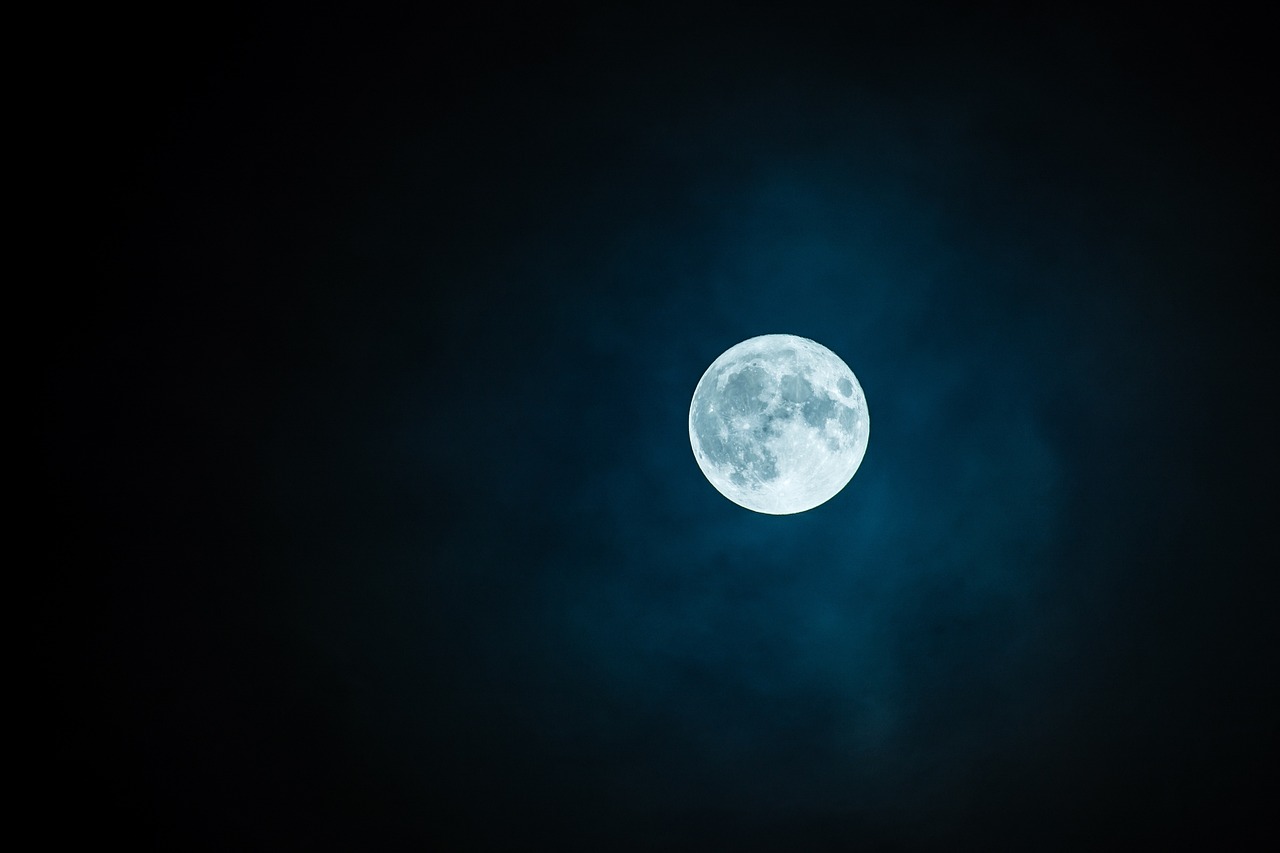
It's the most repeated disappointment in night photography: you point at that huge golden moon, shoot... and get a little blown-out white dot with no detail at all. Photographing the moon has a trick, but it's the opposite of what intuition suggests: the moon isn't a dark subject, it's a rock lit by full sun. You expose it almost like a daytime landscape.
Once you understand this, everything falls into place: fast shutter speeds, low ISO and an exposure that changes with the phase, because a full moon reflects far more light than a first quarter. With the settings by phase clear, you can go out any night of the month with predictable results.
Below are the real gear you need, the exact settings for each phase and how to compose so the moon stops being a lost dot in the sky. If you want the full picture of the night, the night photography and astrophotography guide connects all the pieces.
Why is the moon exposed like a daytime landscape?
The classic starting point is the "Looney 11 rule" (a variant of sunny 16): with a full moon, expose at f/11 with the reciprocal of the ISO as shutter speed. That is: f/11, 1/125 s, ISO 100. From there you adjust for phase and atmospheric conditions.
Why does auto mode fail? Because the meter averages the enormous black sky around the moon and brutally overexposes it to "compensate." Solution: always manual mode, or spot metering on the lunar disc with compensation.
Check with the histogram and the overexposure alerts ("blinkies"): the lunar seas should have texture and the bright areas shouldn't blink.
What settings do I use for each phase of the moon?
Each phase changes the brightness and also the character of the image. The most dramatic detail (craters with long shadows) appears at the terminator, the line between light and shadow, which is why the quarter moons are more photogenic than people think.
Phase: Full moon; Aperture: f/11; Shutter speed: 1/125 s; ISO: 100; Note: Maximum brightness, little relief
Phase: Gibbous; Aperture: f/8; Shutter speed: 1/125 s; ISO: 100; Note: Good balance of brightness and relief
Phase: Quarter (waxing/waning); Aperture: f/8; Shutter speed: 1/60 s; ISO: 200; Note: Spectacular craters at the terminator
Phase: Thin crescent; Aperture: f/5.6; Shutter speed: 1/30 s; ISO: 400; Note: Delicate, near the horizon
Phase: Earthshine; Aperture: f/4; Shutter speed: 2 s; ISO: 800; Note: Faint full disc + bright crescent
Phase: Total eclipse (totality); Aperture: f/4; Shutter speed: 1-4 s; ISO: 1600; Note: Red moon, tripod absolutely required
With shutter speeds of 1/60 s or faster and stabilization on, you can shoot handheld with moderate telephoto lenses. For earthshine and eclipses, a tripod is mandatory.
How much telephoto do you really need?
The moon covers only half a degree of sky. With a 200 mm on full frame, its disc measures about 1.8 mm on the sensor: small. Practical references:
200-300 mm: the moon as a compositional element with a landscape.
400-600 mm: the disc starts to dominate the frame.
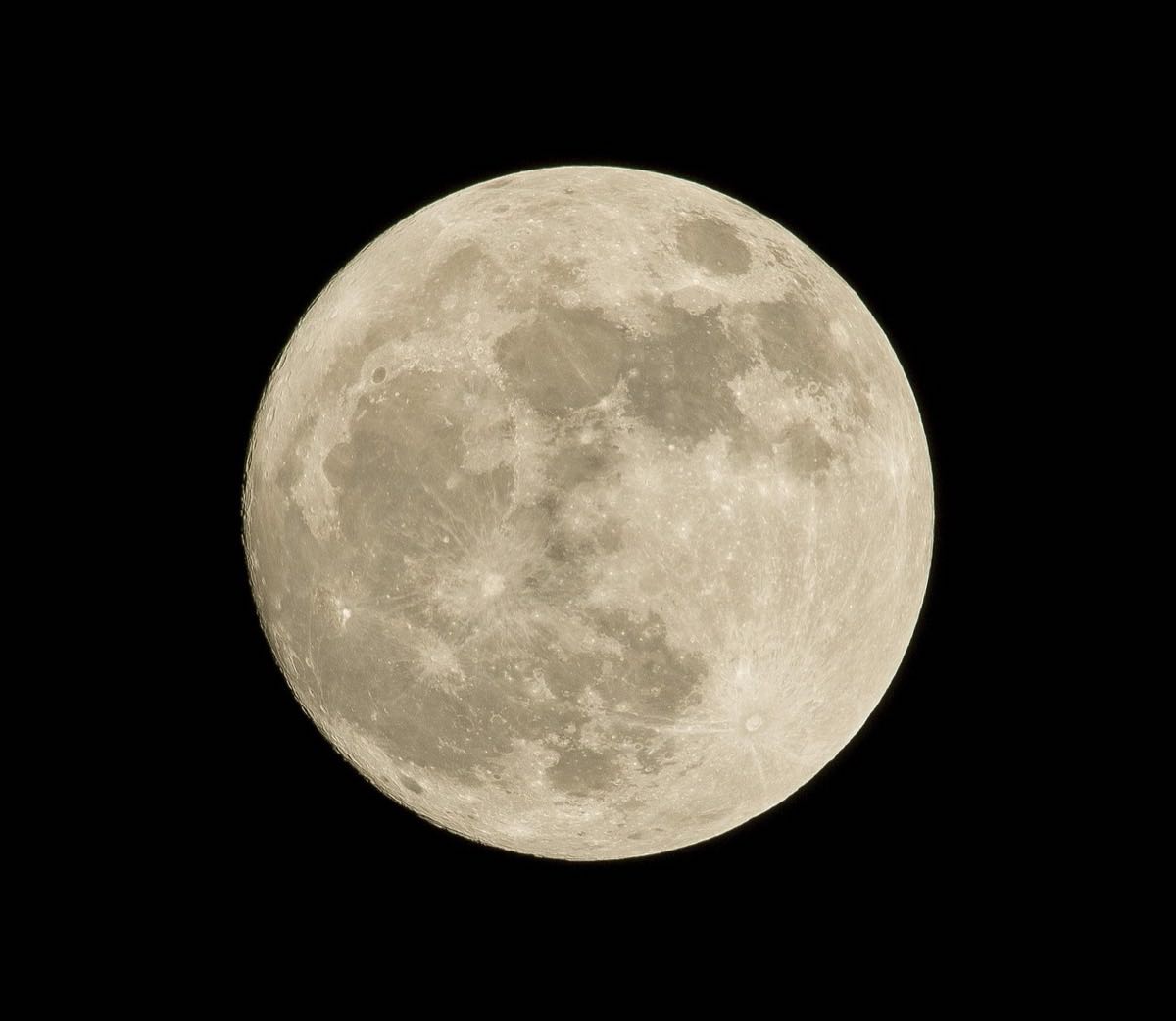
800 mm or more: a lunar portrait with the craters as the stars.
Here APS-C and Micro Four Thirds sensors have the advantage: their crop factor multiplies the effective reach. A 300 mm on APS-C frames like a 450 mm, and on Micro Four Thirds like a 600 mm. You can check exactly what framing you'll get with your combination in the crop factor converter before deciding whether you need more lens.
A sharpness tip with long telephoto lenses: shoot bursts of 5-8 photos and keep the sharpest one. Atmospheric turbulence (seeing) varies second by second, and there's always an instant of still air.
Composition: the moon with context
The isolated lunar portrait is the technical exercise; the memorable photo usually includes context. Two strategies:
Moon in the landscape: photograph moonrise or moonset (at full phase, the moon rises roughly at sunset), when it's low and the sky still holds light. At that moment the contrast between moon and landscape is manageable in a single exposure: try f/8, 1/15-1/60 s, ISO 400 during blue hour.
Telephoto alignments: the moon next to a building, a mountain or a person in silhouette, compressed with 400-600 mm from far away. It requires planning your position to the meter with ephemeris apps. To take advantage of that twilight light around moonrise, see golden hour in summer: exact times and settings; and to master the extreme contrast of these scenes, exposure in complex landscapes: dynamic range control.
Mistakes that burn out moons
Trusting auto mode: it always overexposes. Manual or spot metering.
Unnecessarily high ISO: a full moon allows ISO 100; noise destroys the fine detail of the craters.
Slow shutter speeds with a telephoto: the moon moves; beyond 1 second at 400+ mm it already loses sharpness from its own motion.
Focusing at mechanical infinity: use magnified live view on the edge of the lunar disc.
Shooting with the moon high on a pitch-dark night hoping to include landscape: the contrast is impossible; look for blue hour.
Frequently asked questions
Why does my moon come out as a white ball with no detail?
Overexposure. The meter compensates for the black sky. Switch to manual with f/11, 1/125 s, ISO 100 as a starting point and adjust by looking at the histogram.
Can I photograph the moon without a tripod?
In bright phases, yes: at 1/125 s or faster with stabilization, a moderate telephoto can be handheld. For eclipses, earthshine or very long focal lengths, use a tripod.
What's better for the moon: full frame or APS-C?
For lunar portraits, APS-C has a practical advantage: same lens, more effective reach and more pixels on the disc if the sensor density is high. Full frame wins when you integrate the moon into low-light landscapes.
How do I photograph a supermoon so it looks big?
The giant apparent size is achieved with distance and a telephoto: move hundreds of meters away from the foreground subject (building, person) and compress with 400 mm or more. The supermoon itself is only 7% larger than an average full moon.
If you take away just one idea from this page
The moon is the most grateful night subject: bright, predictable and available every month. Treat it for what it is, a landscape in full sun, and adjust the exposure according to the phase, looking for the terminator for maximum relief.
Save the phase table and keep it handy on your next outing. At Enfogram you'll find the 44 photography cards with the exact settings for every situation: print them, carry them with you and shoot with confidence.