Types of Cameras: Which One Is Right for You
DSLR, mirrorless, compact, bridge and medium format compared: which viewfinder, which sensor and what you give up with each camera type before buying.
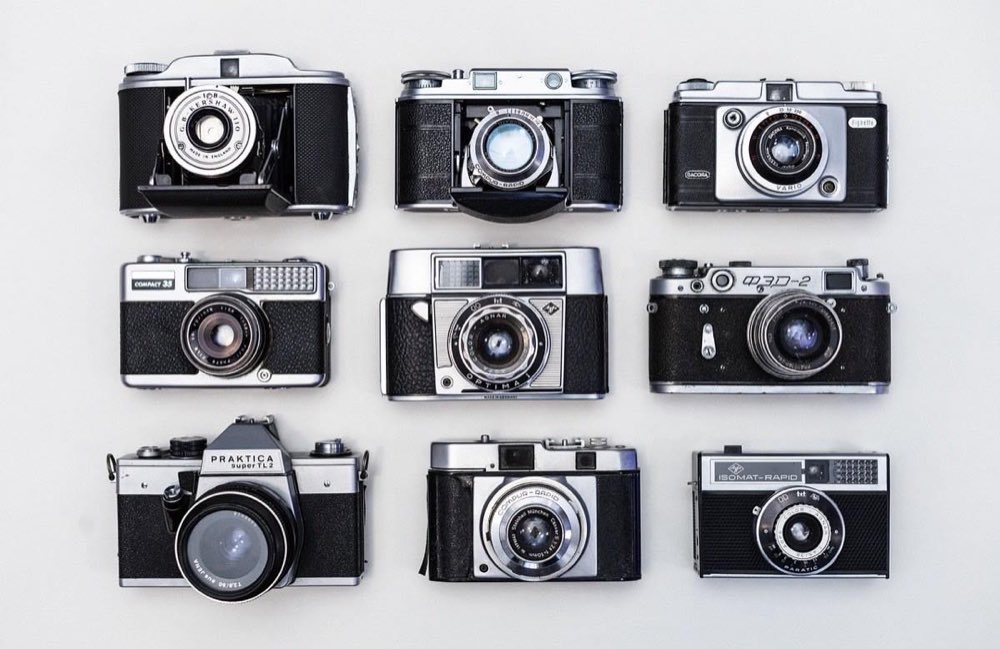
If you are choosing your first one, buy a mirrorless with an APS-C sensor and put a 35 mm-equivalent prime lens on it. That combination learns with you for years and costs less than a full-frame body with the kit zoom, which is the purchase most people regret. The six types of camera you find in a store differ in three things: how you see the scene, how big the sensor is and whether you can change lenses.
What sets one camera type apart from another?
The viewfinder and the mount. Everything else (megapixels, burst rate, tilting screen) changes from one model to another within the same type, and changes again the following year.
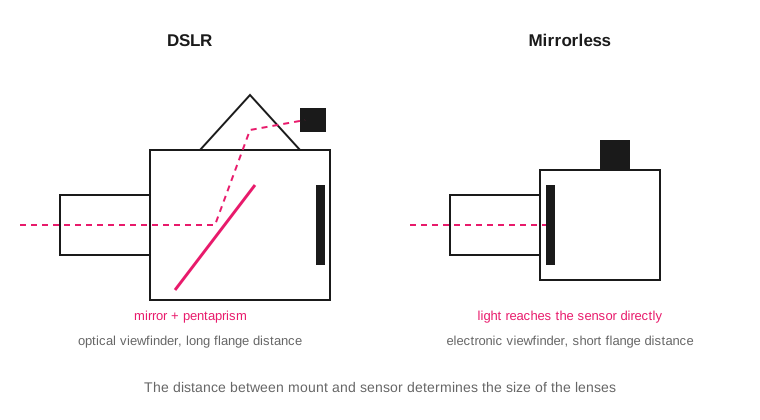
The DSLR diverts light to the viewfinder with a mirror; the mirrorless camera sends it to the sensor and shows on screen what the sensor sees.
In the DSLR, a mirror at 45° sends the light upward, a pentaprism straightens it and you get to see the real scene through glass. In the mirrorless camera, the sensor is exposed the whole time and what you see is its signal on a tiny screen. Removing the mirror shortens the distance between mount and sensor, and that gives rise to more compact lenses and optical designs that were impossible on the DSLR.
The six types, and what you give up with each one
Type: Mirrorless; Usual sensor: Micro 4/3 to full frame; Viewfinder: Electronic: you see the final exposure; Lenses: Interchangeable; What you give up: Battery: the screen and viewfinder drain it at all hours
Type: DSLR; Usual sensor: APS-C or full frame; Viewfinder: Optical: glass, no lag; Lenses: Interchangeable; What you give up: Catalogs that barely grow anymore and larger bodies
Type: Advanced compact; Usual sensor: 1 inch; Viewfinder: Screen, sometimes an electronic viewfinder; Lenses: Fixed zoom, fast at the wide end; What you give up: Quality ceiling and zero focal length flexibility
Type: Bridge or superzoom; Usual sensor: 1/2.3 inch or 1 inch; Viewfinder: Electronic; Lenses: Huge built-in zoom; What you give up: The small sensor: from ISO 800 up, detail goes away
Type: Medium format; Usual sensor: 44 × 33 mm; Viewfinder: Electronic; Lenses: Interchangeable, short catalog; What you give up: Speed, autofocus and burst: it is not for anything that moves
Type: Phone; Usual sensor: On the order of 1/2.3 to 1 inch; Viewfinder: Screen; Lenses: Multiple fixed + processing; What you give up: Real manual control and optical subject separation
The exact dimensions of each format and its corresponding crop factor are in camera sensor sizes.
DSLR or mirrorless?
Mirrorless, unless you buy used on a very tight budget. The electronic viewfinder shows the applied exposure before shooting, so you see whether you have blown out the sky without taking your eye away; autofocus covers almost the whole frame instead of a central zone; and the silence of the electronic shutter opens up scenes that don't exist with a mirror. How each shutter behaves is in mechanical and electronic shutter.
The DSLR keeps two real advantages. The first is endurance: an optical viewfinder doesn't use power, and a DSLR body lasts days that a mirrorless camera doesn't survive without spare batteries. The second is the used market, where a DSLR body and a 50 mm prime make up the cheapest kit you can truly learn with.
What is not an advantage: the "lag" of the electronic viewfinder. On any recent body it is shorter than the time your finger takes to press down.
How much does the body matter compared with the lens?
Less than it seems in the store. The body decides high-ISO noise, burst speed and tracking accuracy; the lens decides the framing, subject separation and character of the image, and survives two or three body changes.
A concrete comparison, on the same budget: a mid-range APS-C body with a 35 mm f/1.8 prime gives a background blur and low-light capability that no full-frame body with the kit zoom at f/3.5-5.6 reaches, because you gain two to three stops of aperture. The criteria for choosing a focal length are in the guide to lens selection and creative use.
Which camera should I buy for what I do?
What you shoot: Learning, street, light travel; Type: Mirrorless; Reasonable format: APS-C with a 23–35 mm prime
What you shoot: Portraits and weddings; Type: Mirrorless; Reasonable format: Full frame with an 85 mm f/1.8
What you shoot: Wildlife and sports; Type: Mirrorless or DSLR; Reasonable format: APS-C: the crop extends the telephoto
What you shoot: Landscape with a tripod; Type: Mirrorless; Reasonable format: Full frame, or medium format if you print large
What you shoot: Video and weightless travel; Type: Mirrorless; Reasonable format: Micro 4/3: much smaller bodies and lenses
What you shoot: Documenting without drawing attention; Type: Advanced compact; Reasonable format: 1 inch, fits in a pocket
What you shoot: Studio advertising and fashion; Type: Medium format; Reasonable format: 44 × 33 mm for detail and tonal gradation
Convert any focal length from one format to another with the crop factor converter before buying a lens with a specific framing in mind.
Isn't a phone enough?
For plentiful light, normal framing and publishing on screen, yes. Where it breaks down is in three very specific places: a real telephoto (the phone's long zoom is largely cropping and reconstruction), scarce light without a tripod, and background blur when the subject is far away, because a sensor a few millimeters wide doesn't produce that separation and the simulated portrait gets the edges of hair and glasses wrong.
The phone's advantage is that it is always on you. If you doubt whether to buy a camera, look at how many of your photos from the past year failed for one of those three reasons.
Frequently asked questions
What is the difference between a DSLR camera and a mirrorless one?
The DSLR has a mirror that diverts light to an optical glass viewfinder; the mirrorless has none and shows in an electronic viewfinder what the sensor is capturing. That makes bodies and lenses more compact, shows the exposure before shooting and allows silent shooting.
Is an APS-C camera good enough for professional work?
Yes, and in wildlife and sports it is even advantageous: the 1.5× crop factor turns a 300 mm into the framing of a 450 mm without adding weight. The difference from full frame is a little more than one stop of noise and a little less background blur at equal framing, not a jump in category.
How many megapixels do I need?
With 24 megapixels you print at 30 × 45 cm with plenty of detail and can crop half the frame without falling short. Beyond that you only gain cropping and large-print margin, and you pay the price in file size and in technique demands: at 45 megapixels any camera shake shows.
Do I buy a new body or a better lens?
Lens, unless your body fails at something you can name: unacceptable noise in the scenes you shoot, autofocus that loses your subjects or insufficient burst. If you can't say which of the three is costing you photos, the body is not the problem.
What to look at before paying
Hold the body with the hand you shoot with and check three things: that you reach the rear dial without repositioning your hand, that the viewfinder is fully visible with glasses if you wear them, and which lenses exist on that mount below what you want to spend next year. An excellent body on a mount with three expensive lenses is a purchase that closes itself. The maintenance and accessories you actually need are in the guide to advanced equipment and maintenance.
The 44 Enfogram cards come with the settings by scene printed, so they work the same with the body you buy and with the next one.