Family Dinner Photos Without Getting in the Way
How to get holiday dinner photos without interrupting: discreet settings, key moments and event photography technique applied to your own table.
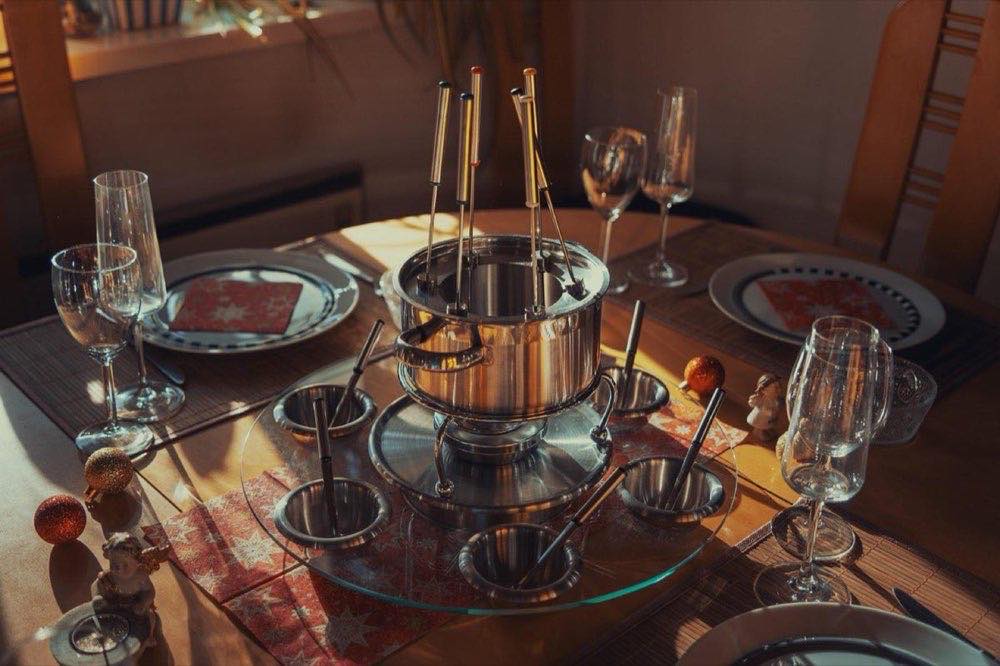
There is an unavoidable tension in December: you want holiday dinner photos that capture the family together, but nobody wants a photographer directing poses between the toast and the reheated leftovers. The camera can document the night or it can hijack it, and the difference is in how you work.
The solution is to treat yourself as a miniature event photographer: anticipate the moments, solve the technique before dinner starts and shoot little but accurately. No twenty-minute sessions with the food getting cold.
This guide covers the complete plan: what to prepare before the guests arrive, the settings that work in a dining room at night, the five moments that are worth it and how to be invisible while you capture them.
How do I prepare the technique before anyone arrives?
The number one mistake is working out the exposure during dinner, asking everyone to "hold it there a second." All of that is decided beforehand.
An hour before, with the table set and the final lights on, take test shots at the empty seat where people will be. Define your base exposure, lock it in manual and touch it as little as possible all night: the dining room light is not going to change. A typical starting point for a dining room with warm lamp and candlelight:
Aperture: f/2–f/2.8
Shutter speed: 1/160 s (people gesture, toast and laugh: they move more than you think)
ISO: 1600–6400 depending on your dining room
White balance: fixed 3200–3800 K, shoot in RAW
Leave the camera ready in an accessible spot, with an empty card and a charged battery. The mechanics of anticipating and solving things beforehand are the same as in professional event photography, compressed to a home scale.
Which moments are worth the night?
You don't need 300 photos of people chewing. You need these five moments, and the rest is a gift:
The table ready, without people: the full set design before the battle. Shoot from overhead or at 45 degrees.
The arrival and the hugs: at the door, with bad light and real emotion. Prioritize 1/200 s even if the ISO screams.
The toast: the only moment when everyone looks at the same point. Position yourself at the opposite end from whoever is speaking.
The hands serving: grandma with the ladle, the turkey at the center, the hands that cross paths. Close-ups at f/2.8.
The after-dinner chat: relaxed laughter, sleeping children, coffee. The light is the worst but the expressions are the best.
Between those moments, put the camera away. Seriously: a camera that is always present makes everyone either pose or hide; a camera that appears for three minutes and disappears captures real people.
Settings by scene of the night
Moment: Table without people; Aperture: f/5.6; Shutter speed: 1/60 s; ISO: 800; Note: Brace yourself or use a tripod
Moment: Arrivals at the door; Aperture: f/2; Shutter speed: 1/200 s; ISO: 6400; Note: Priority to the gesture
Moment: Toast; Aperture: f/2.8; Shutter speed: 1/160 s; ISO: 3200; Note: Focus on the glass closest to the host
Moment: Hands and dishes; Aperture: f/2.8; Shutter speed: 1/125 s; ISO: 1600; Note: Move closer, don't zoom
Moment: After-dinner chat; Aperture: f/1.8; Shutter speed: 1/125 s; ISO: 6400; Note: Black and white saves extreme ISOs
Moment: Candid individual portrait; Aperture: f/2; Shutter speed: 1/160 s; ISO: 3200; Note: Shoot between conversations
If the dining room is really dark, a flash bounced off the ceiling at 1/16 power saves the night without destroying the atmosphere, but test it before dinner: the first flash always draws looks.
How to be invisible in your own home
Use the most discreet lens you have: a small 35 mm or 50 mm prime is less intimidating than a big zoom. Turn off the shutter sound (or use the electronic shutter) and switch off the AF assist light, that red beam that gives away every attempt.
Shoot from your seat. The best after-dinner photos are made without getting up, at the diners' eye level, not standing and looking down. Get up only for the toast and the hands serving.
And a golden rule: first participate, then photograph. If you are present in the conversation, nobody registers the moment you raise the camera. The techniques for capturing authentic emotions without directing them are developed in depth in event photography: telling authentic emotions in real time, and they are the same at a wedding as at your table.
Low light: your only real technical enemy
A dining room at night with warm light is an environment with 3 to 5 stops less light than an interior by day. The three decisions that solve it: a fast lens (f/1.8–f/2.8), a high ISO accepted without guilt (3200–6400 is usable on any modern camera) and a shutter speed never below 1/125 s with people.
If you are torn between a noisy photo and a blurry one, always choose the noisy one. Grain is reduced in editing; motion is not. The complete breakdown of how to stretch every stop of light is in low light without noise: focus, ISO and real minimum shutter speed.
Frequently asked questions
Should I take the formal group photo or is it better to just capture moments?
Take one, at the beginning or at the toast, in a timed 60 seconds: tripod or camera propped up, f/4, timer, two shots and done. Having that photo frees the rest of the night from the pressure of posing, and you from chasing it.
How do I photograph the people who always cover their faces?
Don't point at them directly: include them in wide shots of the table where they are not the only subject, or capture them while they interact with children, when they let their guard down. And respect the one who truly doesn't want it: some portraits aren't worth the discomfort.
Phone or camera for the dinner?
The camera with a fast lens wins in the dark dining room, but the best system is a hybrid: camera for the five key moments, phone for the spontaneous pocket-sized stuff. The photo that exists always beats the one that stayed in the packed-away gear.
How many photos should I end up delivering to the family?
Between 20 and 40 selected and edited are worth more than 400 unfiltered. Pick one per expression, delete duplicates and share them in the following days, while the emotion is still fresh.
Everything solved before the doorbell rings
Photographing the holiday dinner without ruining it is a matter of method: exposure solved before the doorbell rings, five key moments identified, camera present only when it matters. Event technique applied to your own family, with the advantage that you know the protagonists.
This December, be the one who brought the photos and who was also there for the after-dinner chat. At Enfogram you will find the 44 photography cards with the exact settings for every situation: print them, carry them with you and shoot with confidence.