Tripods: How to Choose the Right One
How to choose a tripod without mistakes: materials, heads, weight and stability explained with clear criteria for each type of photography.
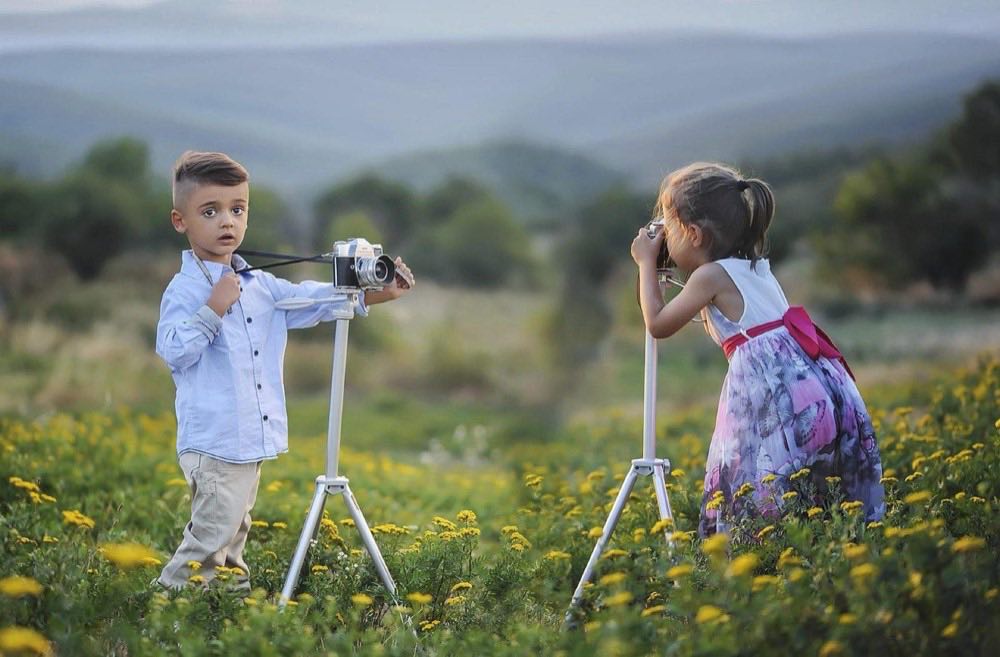
A tripod is the least glamorous and most decisive purchase in photography gear. Knowing how to choose a tripod correctly saves you the most expensive mistake in the trade: buying three bad tripods before accepting that you needed one good one. It happens all the time: the first one cheap and wobbly, the second "a little better," and finally the one you should have bought from the start.
The reason is that a tripod is not an accessory: it is the physical foundation of all your long-exposure photography. Night shots, landscapes with filters, timelapses, macro, architecture, self-portraits... all depend on that three-legged structure not moving a single millimeter for 30 seconds in the wind.
This guide gives you objective criteria (load capacity, materials, head, height, leg sections) so that your first purchase is the final one. And since the tripod is only one piece of the system, the guide to advanced equipment and maintenance covers the rest of the ecosystem and how to take care of it.
Load capacity: the rule of double
The first number you should look at is the maximum supported load. The practical rule: choose a tripod that supports at least double the weight of your heaviest camera and lens combination.
Why double? Because the manufacturer's figure measures how much it withstands without collapsing, not how much it holds without vibrating. A 700 g body with a 1.4 kg 70-200mm f/2.8 adds up to 2.1 kg: you need a tripod with a real capacity of 4-5 kg. In addition, when you tilt the camera vertically or use long focal lengths, the center of gravity shifts and punishes the structure much more than static weight.
Aluminum or carbon fiber
Criterion: Weight (mid-size tripod); Aluminum: 2 - 2.5 kg; Carbon fiber: 1.3 - 1.7 kg
Criterion: Vibration absorption; Aluminum: Medium; Carbon fiber: Excellent
Criterion: Behavior in the cold; Aluminum: Freezing to the touch; Carbon fiber: Neutral
Criterion: Impact resistance; Aluminum: Dents, keeps working; Carbon fiber: Can splinter
Criterion: Relative price; Aluminum: Baseline; Carbon fiber: 1.5x to 2.5x more
The decision is an honest one if you answer one question: how much are you going to walk with it? For work near the car or in the studio, aluminum offers the same stability for less money. For hiking, travel and astrophotography nights reached on foot, every gram counts and carbon pays for itself. Its ability to absorb vibrations also helps in long exposures in the wind, which is critical if you do night photography with pinpoint stars, where any micro-vibration over 20 seconds ruins the shot.
The head matters as much as the legs
Many mid-to-high-end tripods are sold without a head, and that is a good sign: it lets you choose the right one.
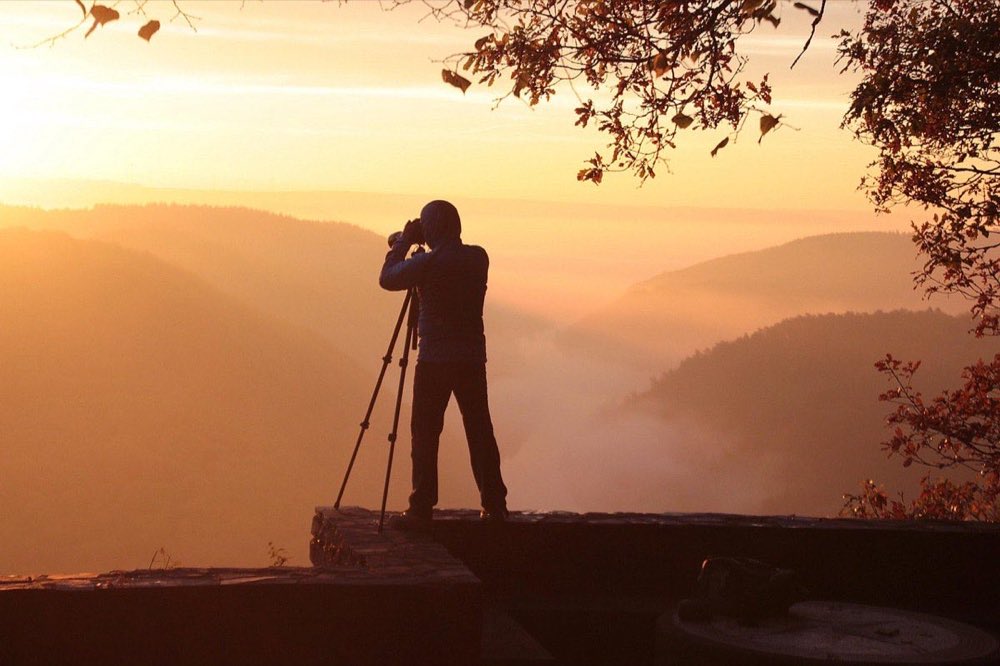
Ball head: the most versatile. Quick to frame, compact, ideal for landscape, travel and night photography. Look for one with adjustable friction and an independent panning base.
Three-way head (pan-tilt): precise control axis by axis. Perfect for architecture and product work, slow for everything else.
Geared head: millimeter precision for architecture and macro. Expensive and heavy.
Fluid head: smooth movements for panning; essential only if you shoot video.
Check that it uses an Arca-Swiss clamp, the de facto standard: it will let you combine plates, L-brackets and accessories from any brand.
Height, sections and center column
The comfortable maximum height is the one that puts the viewfinder at eye level without extending the center column. A raised column turns the tripod into a wobbly monopod on three legs: use it only as a last resort.
On leg sections: 3 sections offer maximum rigidity and quick deployment; 4 or 5 sections achieve folded sizes of 35-45 cm ideal for travel, at the cost of some rigidity in the last (thinnest) section. If you travel a lot, accept the trade-off; if not, fewer sections is always better.
Details that separate a good tripod from a mediocre one: a center hook to hang your backpack as ballast, legs that open to multiple angles for working at ground level (key in macro, as you will see in 1:1 macro photography with extreme sharpness), interchangeable feet (rubber/spikes) and screw or lever locks well sealed against sand and dust.
Settings and habits that get the most out of your tripod
The best tripod used badly vibrates just the same. Habits that change results:
Extend the thick sections first; leave the thinnest for last.
Turn off the lens or body stabilizer when mounting the camera (it can self-induce vibration).
Use a 2 s timer, a remote release or your camera's app.
On DSLR cameras, turn on mirror lock-up or live view mode for exposures between 1/60 s and 2 s, the range where mirror slap affects the shot most.
In wind, hang weight from the center hook and do not extend the legs fully: a tripod at half height with 25 mm leg diameter withstands gusts that would knock over a fully extended one.
Frequently asked questions
How much should I spend on my first serious tripod?
As a general reference, a reliable set of legs and ball head starts in the mid price range of specialized brands. The right buying signal is not the figure but the test: with your camera mounted and the column down, when you tap it the vibration should disappear in less than a second.
Is a small travel tripod good for astrophotography?
Yes, if you choose well: carbon, legs of at least 22-25 mm in the top section and without extending the column. Being lower, it even gains stability. Its limit is long telephoto lenses.
Is a monopod worth it instead of a tripod?
They are different tools. A monopod stabilizes telephoto lenses in sports and wildlife where a tripod is impractical, but it is no use for exposures longer than about 1/15 s. It does not replace the tripod in night or landscape photography.
How do I maintain my tripod after using it at the beach or in a river?
Take the sections apart, rinse with fresh water, dry completely and lightly lubricate the threads. Sand in the locks is the main cause of premature tripod death.
The four decisions that define the tripod
Choosing a tripod comes down to four decisions: load capacity at double your gear, material according to how much you walk, a ball head with an Arca-Swiss clamp as the default option, and enough height without the column. Buy once and buy well: it is one of the few pieces of gear that can last you twenty years.
With the foundation settled, what remains is knowing which settings to use on top of it in each scenario. At Enfogram you will find the 44 photography cards with the exact settings for every situation: print them, carry them with you and shoot with confidence.