Narrative Landscape Photography: Visual Stories of Place
Learn to photograph narrative landscapes that convey stories and emotion. Composition, light, hyperfocal distance and ND filters with visual intent.
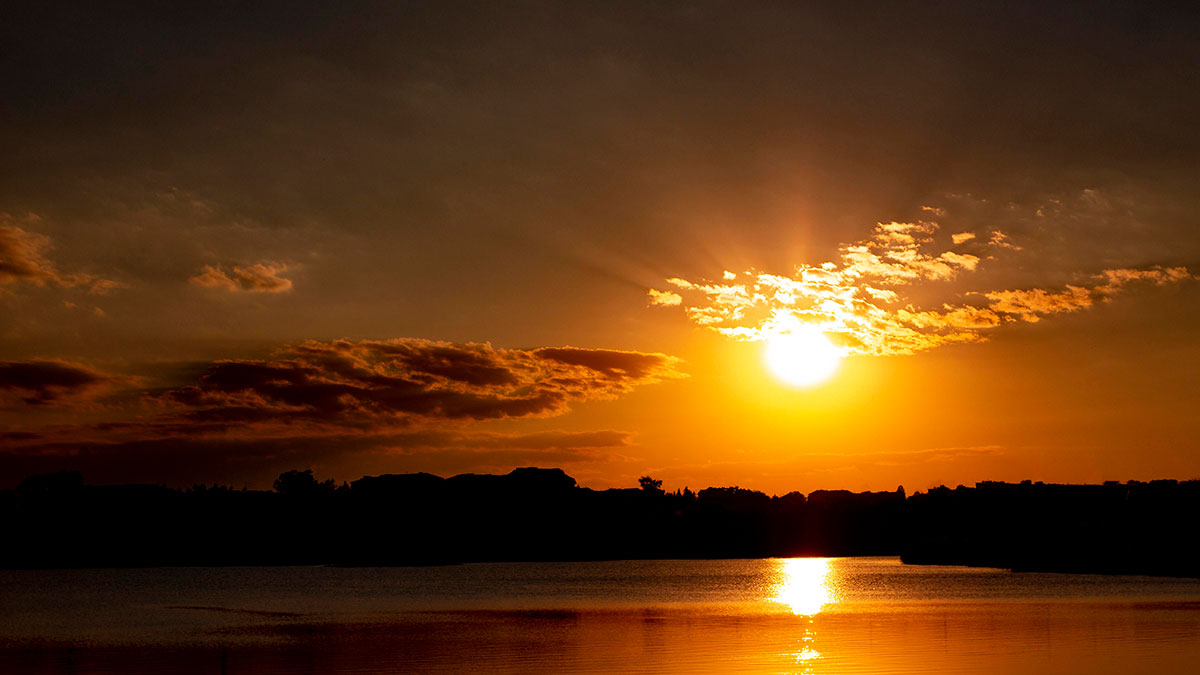
Before you set up the tripod, decide what you want the person looking at the photo to feel. That decision (solitude, adventure, tension) is what sets what time you head out, what focal length you mount and whether you wait for fog or a storm.
Photographing a valley, a mountain or a beach should not be limited to capturing what is in front of the camera: it is about conveying the story and atmosphere of the place. That is the essence of narrative landscape.
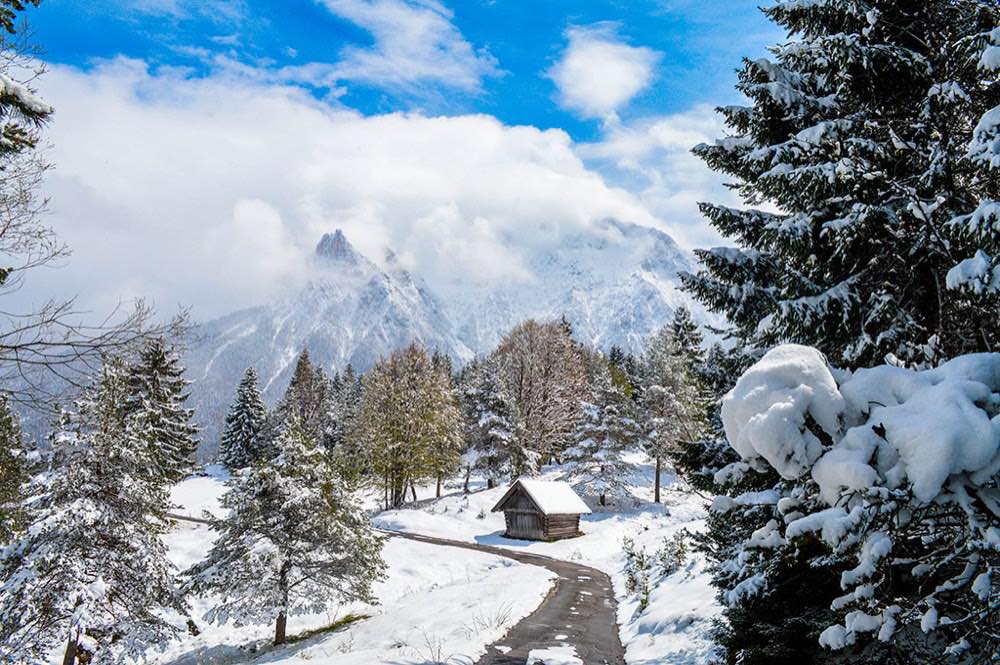
The strength of this style does not depend only on technique, but on the ability to observe and decide what to tell. Weather, light, human elements and even the choice of viewpoint determine the final message. A lone cabin under a stormy sky conveys solitude and resilience; a group of hikers in the warm light of dawn speaks of adventure and discovery.
To achieve it you need two things: technical resources (hyperfocal distance, filters, control of the time of day) and a narrative intention that you already have decided on when you arrive.
What styles of narrative landscape exist?
The epic landscape is characterized by the use of a wide angle, stopped-down apertures such as f/11 and the hyperfocal technique, with a dramatic foreground that adds scale and depth. The intimate or detail landscape, in contrast, uses telephoto lenses at f/8 to isolate elements and highlight textures or fragments of the surroundings.
The minimalist style seeks compositional simplicity: few elements, negative space and a strong emphasis on atmosphere. Finally, the narrative landscape with human presence adds subtle figures (a walker, a boat, a silhouette) that enrich the story and create a connection between viewer and place.
Each approach calls for a different technical setup and also a different way of relating to the surroundings. The epic landscape demands patience to wait for the right light and prior exploration of the terrain. Minimalism requires learning to see less, to eliminate the superfluous and keep only what tells the story. The intimate landscape invites you to get closer, to discover details the eye discards out of habit.
What settings do I use in each scene?
At golden hour, the best results come with ISO 100, f/8 to f/11 and a tripod, taking advantage of the warm, soft light. On an overcast day, working with ISO 200–400 and f/8 boosts the saturation of greens and blues under diffused light.
For sunrise, the recommendation is to arrive at least 45 minutes early, set up the camera in the dark and plan a series of exposures as the light changes. Neutral density (ND) filters of 3 to 6 stops let you lengthen the exposure to get silky water or moving clouds, adding an extra narrative component to the image.
Scene: Golden hour; Starting settings: ISO 100, f/8–f/11, tripod
Scene: Overcast day; Starting settings: ISO 200–400, f/8
Scene: Epic landscape with foreground; Starting settings: Wide angle, f/11, focus at the hyperfocal distance
Scene: Intimate or detail landscape; Starting settings: Telephoto, f/8
Scene: Silky water or moving clouds; Starting settings: 3 to 6 stop ND filter
So you do not have to estimate the hyperfocal distance by eye, the hyperfocal calculator gives the exact distance for your focal length and aperture. And exposure in complex landscapes solves the hard case: when the contrast between sky and land is very high. Using the histogram as a real-time guide helps you avoid blown skies or dark foregrounds that ruin the narrative.
How do I compose so the story reads?
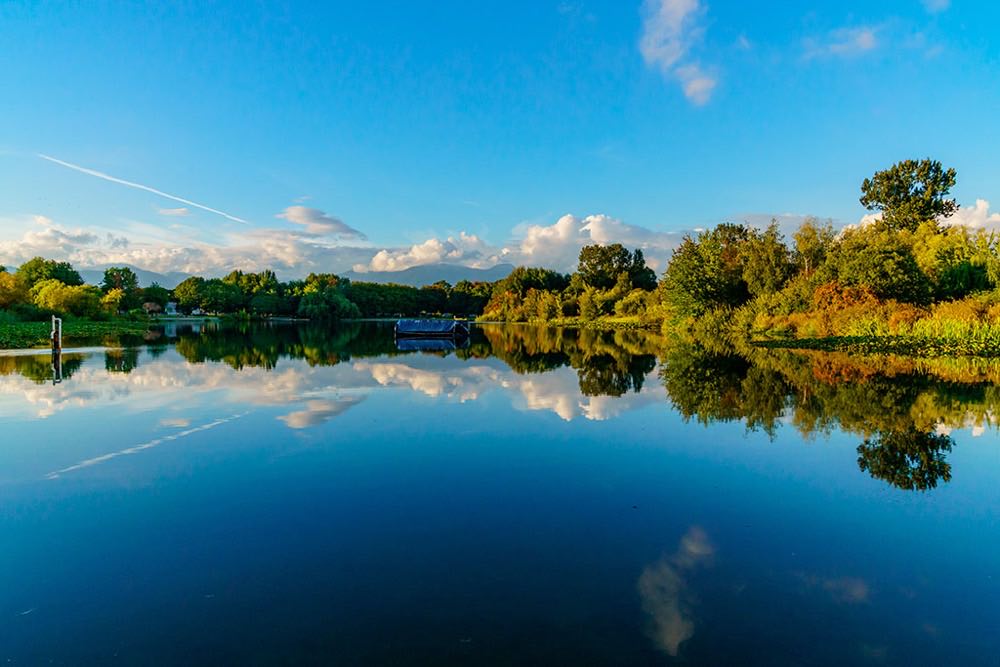
A good narrative landscape always has a clear visual hierarchy. The foreground can become the protagonist and serve as an entrance to the rest of the scene, adding scale and depth. Weather and atmospheric conditions are also creative allies: fog for mystery, rain for drama or wind to suggest movement.
The rule of thirds, though well known, remains a useful starting point: placing the horizon line in the lower third when the sky is the protagonist, or in the upper one when the terrain has greater visual richness. Leading lines (paths, rivers, fences) lead the eye within the frame and reinforce the sense of depth.
Everything comes back to the same question: what do you want the person looking at the photo to feel? Composition is the means to reinforce the story of the place and your personal interpretation of it.
Light as a narrative element in landscape
Light does not just illuminate the landscape: it defines it. The same mountain photographed at midday, at sunset or in a storm tells three completely different stories. That is why the narrative landscape photographer learns to plan outings around the expected light, not just the location.
The blue hour (the minutes before sunrise and after sunset) offers a balanced, tonal light that favors serene and contemplative landscapes. A storm, in contrast, creates dramatic contrasts and atmospheres of tension that no filter can imitate. Morning fog softens contours, creates layers of depth and adds a mystery that is hard to replicate.
The guide to narrative landscape photography brings these approaches together in a single path, and natural light in photography is the direct complement to this section.
The four mistakes that erase the story
A frequent mistake is filling the frame with too many elements, which creates confusion and eliminates the narrative. It is also common to overuse the wide angle in every situation, missing the chance to explore more intimate or minimalist perspectives.
Another problem is ignoring weather conditions, when fog, rain or wind are half the story. Finally, blindly trusting "focus at infinity" without verifying real sharpness with hyperfocal distance can ruin the texture and detail that sustain the character of the image.
Frequently asked questions
What lens is best for narrative landscape?
There is no single lens. Wide angles are ideal for epic landscapes with a dominant foreground, but a telephoto is perfect for intimate details, compressing planes or isolating specific elements of the surroundings.
How do I use hyperfocal distance in practice?
Focus at the hyperfocal distance calculated for your selected aperture (for example f/11 with a 24mm). That way you guarantee that both the foreground and the horizon are within the sharp zone without needing to recompose.
Is it worth using ND filters for landscape?
Yes, especially when you want to add narrative through time: silky water, moving clouds or more ethereal atmospheres that communicate the passage of time or fluidity.
Is a tripod necessary for landscape photography?
In most narrative landscape situations, yes. Especially at blue hour, at sunrise or when using long exposures with ND filters. The tripod also forces you to work more calmly and compose more carefully.
What to decide before leaving the house
Three things, and all three before you pick up the backpack: what you want the person looking at the photo to feel, what time the light has to be there for that, and whether the foreground rules (wide angle at f/11 with hyperfocal focusing) or the detail rules (telephoto at f/8).
At sunrise, arrive 45 minutes early. The photo you are after lasts a few minutes and you cannot improvise the composition while it happens.
The 44 cards from Enfogram come with the landscape settings printed on them (apertures, ISO, hyperfocal distance and ND stops), so you can look them up with cold hands and no battery left on your phone.