Outdoor Family Photo Sessions: A Complete Guide
Complete guide to an outdoor family photo session: timing, location, camera settings, natural poses and handling young children.
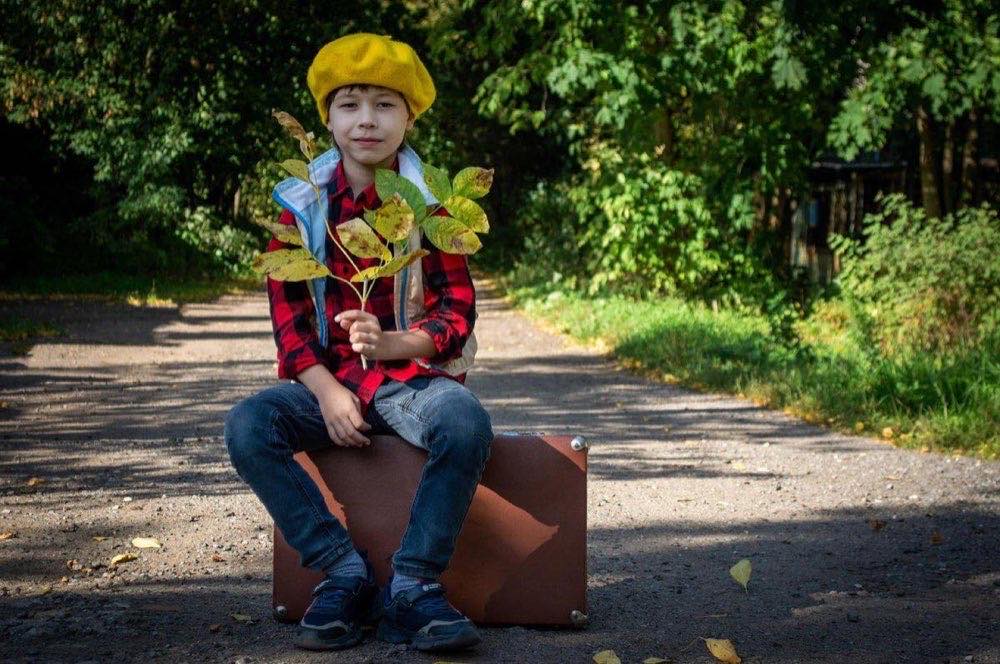
An outdoor family photo session is, on the surface, the simplest job in the catalog: natural light, a pretty park and people who love each other. In practice, it is an exercise in group direction with changing light, children with limited patience and adults who "don't look good in photos." The technique is the easy part; managing the moment is the real craft.
The difference between a decent gallery and a gallery the family prints and gives as gifts comes down to three decisions made before shooting: the timing, the location and the activity plan (not the poses).
This guide covers the whole process: planning, specific camera settings, natural group direction and the mistakes that ruin technically perfect sessions.
Planning: the session is won before you arrive
Timing: light decides half the result
The best time is almost always the last hour and a half before sunset: warm, low, soft light and flattering shadows. The second best is early morning (with small children it's sometimes even better: they arrive rested). Avoid midday; if there is no alternative, look for even open shade.
Since the exact time changes with the date and the city, calculate the golden hour for your session with this free tool and ask the family to arrive 15 minutes before the best light starts.
Location: variety within 100 meters
The ideal location offers 3–4 different backgrounds without long walks: a grove, an open field, a texture (wall, fence) and something interactive (path, bench). With children, every long move costs energy and patience. Visit the location at the same time as the session to check where the light comes in.
Brief to the family
Send a short note before the session: clothing in a coordinated palette without being uniform (neutral tones and one or two color accents; avoid large logos and aggressive patterns), snacks for the children, and the honest expectation: "we're going to play, not pose." That phrase reduces the parents' anxiety, which is contagious.
Much of the logic of anticipating moments instead of forcing them comes from event coverage; the event photography guide goes deeper into how to read and narrate real emotions in real time.
What camera settings do I use for moving groups?
With families, the technical priority is to freeze motion and keep everyone in focus; artistic blur comes later.
Situation: Full group (5+ people); Aperture: f/5.6–f/8; Minimum shutter speed: 1/250 s; ISO: Auto (cap 3200); Focus: Zone AF, eye of the central subject
Situation: Couple or two siblings; Aperture: f/2.8–f/4; Minimum shutter speed: 1/250 s; ISO: Auto; Focus: Continuous AF with eye detection
Situation: Children running / playing; Aperture: f/4; Minimum shutter speed: 1/500–1/1000 s; ISO: Auto; Focus: Continuous AF + burst
Situation: Individual portrait (grandparents, baby in arms); Aperture: f/2–f/2.8; Minimum shutter speed: 1/200 s; ISO: 100–400; Focus: Nearest eye
Situation: Golden-hour backlight; Aperture: f/2.8–f/4; Minimum shutter speed: 1/500 s; ISO: 100–200; Focus: Spot metering on the face
Three practical notes: in groups, line people up in the same plane of focus or stop down to f/8; use a short burst on all group photos (someone always blinks); and in backlight, expose for the skin and let the background overexpose with that golden glow. To master the balance between aperture, shutter speed and ISO in changing light, review the exposure triangle explained with real examples.
Natural direction: activities, not poses
The best family photos come from directed games, not from "everybody look at the camera." An activity script for 60–75 minutes:
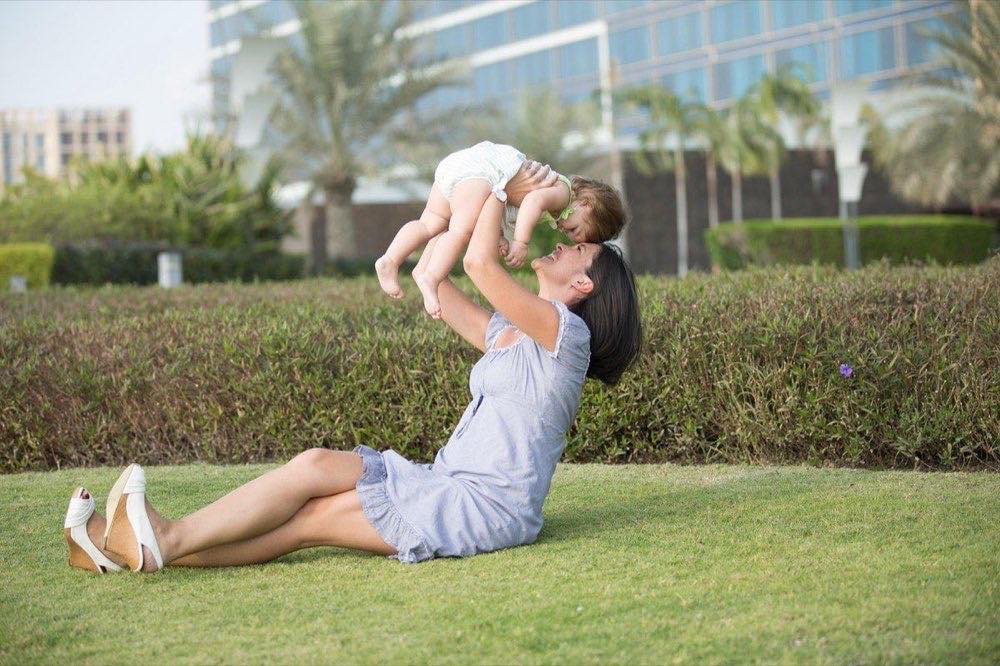
Walking warm-up (10 min): the family walks hand in hand toward you, talking to each other. It helps them forget the camera and gives you your first moving group photos.
Classic group photo (10 min): do it early, when everyone is fresh and well-groomed. Two or three variants and done.
Games in pairs (20 min): dad tosses the child in the air, tickles, races, whispered secrets, "make the fakest laugh you can" (which always ends in a real laugh).
Combinations (15 min): just the siblings, just the couple, each child with each adult, an individual portrait of the grandparents if they're there.
Free finale in the best light (10 min): backlight, silhouettes, the family walking away. The most emotional material usually comes out here.
With small children, there is one rule: the child sets the pace. If the battery ran out at 40 minutes, you already have the gallery; don't force it. And have the perfect assistant: a parent making ridiculous noises right behind your shoulder.
The connection you're after in each individual portrait (relaxed gaze, genuine gesture) is worked on the same way as in professional portraiture; there are concrete techniques in contemporary portraiture: technique and connection for images with soul.
What mistakes ruin technically correct sessions?
Arriving with the sun already on the horizon: golden hour disappears in minutes; arrive ahead of time, not on time.
Chasing perfection in the group photo: three good attempts beat fifteen attempts with crying children.
Ignoring shy adults: give them a physical task (carrying, hugging, walking) and the stiffness disappears.
Shooting everything at f/1.8: in groups, someone will come out of focus. Everyone's sharpness is worth more than bokeh.
Not taking the "boring" photo grandma wants: everyone looking at the camera, smiling. It's the one they're going to print. Do it well and then play.
Frequently asked questions
How long should an outdoor family session last?
Between 60 and 90 minutes. With children under 4, plan the essential content in the first 40 minutes.
What do I do if the day dawns overcast?
An even overcast is a giant softbox: saturated colors and zero hard shadows. Raise the base ISO, watch the white balance (it tends to cool) and take advantage of being able to shoot in any direction. Only rain justifies rescheduling.
How many photos are delivered from a family session?
Between 30 and 50 edited ones for a 60–90 minute session is a usual range. Define the number in your contract and deliver a curated gallery: 40 excellent photos beat 120 with repeats.
Should I bring a flash or reflector?
A folding reflector of 80–110 cm solves most situations (filling shadows in open shade or backlight). Fill flash is useful, but with children in motion the reflector is faster and less invasive.
Half planning, a third direction
A successful family session is 50% planning (timing, location, brief), 30% directing games and 20% well-automated technique. When the light is calculated and the settings decided in advance, your attention is free for the one thing that cannot be repeated: the moment between the people.
Prepare your activity script, check the golden hour for your next date and have the settings ready before leaving home. At Enfogram you'll find the 44 photography cards with the exact settings for every situation: print them, bring them to the session and shoot with confidence.