Famous Photographers: What to Look for in Their Work
Twelve photographers, the concrete lesson each body of work offers and an exercise to practice it: light, moment, distance, framing and editing.
A list of names does not change a single one of your photos. What transfers from an author to your camera is a concrete instruction: where you stand, what you wait for, how far you back away and how much you throw out afterward. Twelve authors, twelve instructions, each with an exercise you can do this week without buying anything.
What exactly do you look at in a photographer's work?
Six things, and all of them can be copied without prior talent:
Light. If the edge of the shadow is razor sharp, the sun was bare.
Moment. What was happening a second earlier: it reveals how long the author waited.
Distance. How many steps away the subject is. It is what most separates a beginner from an author.
Framing. What was left out. Look at the edges before the center.
Editing. How many photos are behind the one you see.
Access. Why that person let themselves be photographed.
The twelve, with their exercise, in one table
Photographer: Henri Cartier-Bresson; Period: 1908-2004; What to look for in their work: The background, chosen before the subject; Exercise to practice it: Frame a background and wait ten minutes
Photographer: Ansel Adams; Period: 1902-1984; What to look for in their work: The tone decided before exposing; Exercise to practice it: Say which area will be middle gray, then meter
Photographer: Robert Frank; Period: 1924-2019; What to look for in their work: The selection: 83 out of 28,000; Exercise to practice it: Keep three photos from your last outing, archive the rest
Photographer: Saul Leiter; Period: 1923-2013; What to look for in their work: Something placed between camera and subject; Exercise to practice it: Ten photos through a window or a grille
Photographer: Elliott Erwitt; Period: 1928-2023; What to look for in their work: Camera height; Exercise to practice it: The same scene at eye level and at ground level
Photographer: Fan Ho; Period: 1931-2016; What to look for in their work: The shadow as subject; Exercise to practice it: With the sun low, photograph only shadows on walls
Photographer: Sebastião Salgado; Period: 1944-2025; What to look for in their work: Scale, from afar and from above; Exercise to practice it: Step back twenty paces, go up one floor, repeat
Photographer: Dorothea Lange; Period: 1895-1965; What to look for in their work: Six exposures, closer in each one; Exercise to practice it: Six photos of one scene, one step closer each time
Photographer: Vivian Maier; Period: 1926-2009; What to look for in their work: The waist-level point of view; Exercise to practice it: One outing with the camera at your chest, not at your eye
Photographer: Graciela Iturbide; Period: b. 1942; What to look for in their work: Access earned over time; Exercise to practice it: Go back to the same place four Saturdays before shooting
Photographer: Cristina García Rodero; Period: b. 1949; What to look for in their work: The project over the single photo; Exercise to practice it: One single theme, twelve outings in a year
Photographer: Berenice Abbott; Period: 1898-1991; What to look for in their work: What is about to disappear; Exercise to practice it: Photograph a shop with the closing sign up
Seven photographers and the lesson each one leaves
Henri Cartier-Bresson (French, 1908-2004). He co-founded Magnum Photos in 1947 and published Images à la sauvette in 1952. In Derrière la gare Saint-Lazare (1932, Place de l'Europe, Paris) a man leaps over a flooded area without touching it, his reflection below: the background was decided, the instant was only waited for. Pre-focusing at a fixed distance lets you look at the background instead of the focus ring, which is what zone focusing at f/8 is for.
He demanded uncropped prints, with the black border of the negative included, and this is one of the few he did crop: he shot through the gaps in a plank fence and removed a blurred shadow and some dead space under the puddle.
Ansel Adams (American, 1902-1984). In Monolith, the Face of Half Dome (1927, Yosemite) he used a dark red filter to accentuate tonal contrast, and around 1939-1940 he developed the Zone System with Fred Archer, a scale from Zone 0 to Zone X for deciding exposure, development and printing. He made more than 1,300 different prints of Moonrise, Hernandez, New Mexico (1941) over 40 years. Decide the tone before exposing: today that means reading the histogram before the shot, not after.
Robert Frank (Swiss-American, 1924-2019). With a Guggenheim fellowship he traveled across the United States between 1955 and 1957, made some 28,000 photographs and chose 83 for the book: Les Américains (1958), The Americans (1959). One in every 337. Editing is the work, and it is practiced the same way with 300 files: a portfolio of 20 photos rather than 200 is the same exercise in miniature.
Saul Leiter (American, 1923-2013). He arrived in New York in 1946 and concentrated his street color work between 1948 and 1960, a few blocks from his East Village apartment. He composed through steamed-up windows, half-open doors and falling snow: he put material in the way instead of clearing it. His first monograph, Early Color, came out in 2006. Put something in front of the lens; four blocks are enough for an entire body of work.
Elliott Erwitt (American born in Paris, 1928-2023). At Magnum from 1953. Felix, Gladys and Rover (New York, 1974) is framed at ground level: the legs of a Great Dane, the owner's black boots and a tiny Chihuahua in a knit cap looking at the camera. It came out of an advertising assignment for boots, and the dogs carry the gaze at ground level. Lower your camera height.
Fan Ho (Chinese, 1931-2016, active in Hong Kong). He photographed the streets of Hong Kong in the fifties and sixties. In Approaching Shadow (1954) his cousin poses against a wall at Queen's College, in Causeway Bay, with a large diagonal shadow crossing the wall. By his account, the shadow was not there: he added it in the darkroom, where he developed in the bathtub at home. A canonical image of street light is a darkroom construction, and the geometry of the shadow is the subject; start by telling hard light from soft light.
Sebastião Salgado (Brazilian, 1944-2025). An economist by training, he moved into photography in 1973 and was at Magnum between 1979 and 1994; he died in Paris on May 23, 2025. In the Serra Pelada series (Brazil, 1986) he photographed in black and white, from an elevated point and at a distance, a crowd of miners packed together climbing wooden ladders up an excavated slope, with the figures reduced almost to dots. Scale appears when you stop getting closer.
How do I practice this on a street outing?
Three of them fit into a two-hour walk. Choose a background (a wall, a diagonal shadow, a sign), plant yourself and wait ten minutes for someone to walk into it. Continue with Lange's series: six exposures of the same scene, one step closer in each. Finish with Erwitt's: that scene at eye level and at ground level.
With a 35 mm on full frame, at f/8 and focus fixed at 3 m, the sharp zone runs from about 1.9 to 7 m: any pedestrian crossing the frame comes in focused. On APS-C the range changes. The cost is light, because f/8 on a street in shade leaves you short on speed and forces you to raise the ISO. The complete mechanics are in the street photography guide.
Which women photographers should you know?
Canons are built by those who publish, those who exhibit and those who keep archives, and for decades those three doors opened much less for them. There is no figure to cite; there are, however, five bodies of work that teach as much as the previous ones.
Dorothea Lange (American, 1895-1965). Employed from 1935 by the Resettlement Administration, later the Farm Security Administration, she photographed the rural poverty of the Depression and the internment of Japanese Americans. Migrant Mother (Nipomo, California, 1936) came from six exposures and, by her own account, ten minutes at the camp: two wide shots, one step closer in each exposure, vertical in the second-to-last and the mother centered in the last. Do not make one photo; make six and get closer with each one.
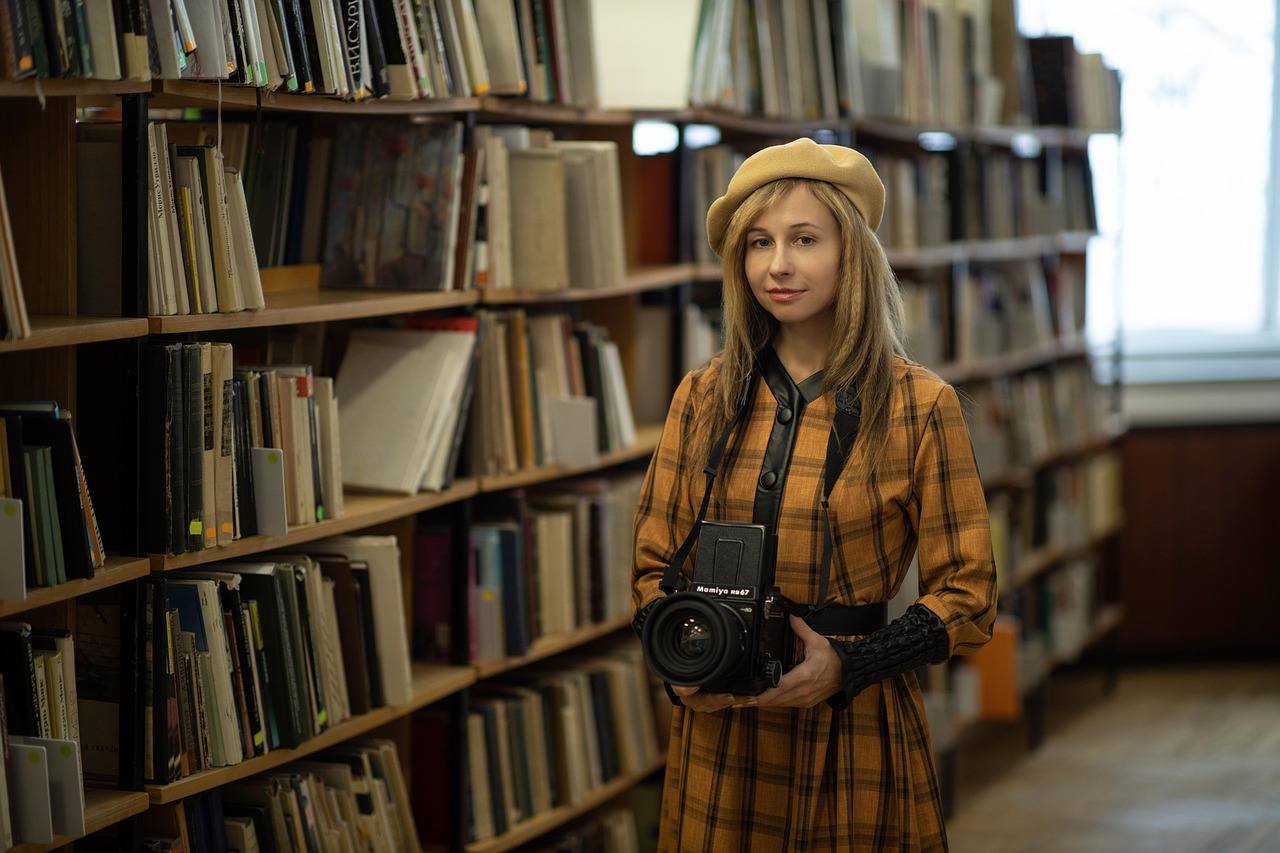
Vivian Maier (American, 1926-2009). She worked for some forty years as a nanny on the north side of Chicago from 1956 and left more than 150,000 photographs of street life, people and architecture in Chicago, New York and Los Angeles. She used a twin-lens reflex, whose viewfinder is looked into from above with the camera at waist level: lowering it from the eye to the chest changes the point of view and also the relationship with whoever is in front of you, who no longer sees a lens pointed at their face.
Graciela Iturbide (Mexican, born 1942). She began in 1970 and was a student and assistant of Manuel Álvarez Bravo (Mexican, 1902-2002) between 1970 and 1971. She photographs everyday life in Mexico and the Zapotec, Mixtec and Seri peoples; Nuestra Señora de las Iguanas (1979), a Zapotec woman from Juchitán de Zaragoza with iguanas on her head and shoulders, became so well known there that statues and murals were built from it. Some photos only exist when you stop being a visitor.
Cristina García Rodero (Spanish, born 1949). She began in 1974 with a grant to photograph rites, festivals and popular traditions, extended the work over more than fifteen years and closed it with España oculta (1989); Spain's National Photography Prize in 1996 and Magnum Photos in 2005, as a full member in 2009. A single theme over fifteen years beats fifteen themes in a year.
Berenice Abbott (American, 1898-1991). Portrait, urban architecture and scientific photography, from the twenties to the eighties. Between 1935 and 1939 she made Changing New York, some 305 photographs of neighborhoods, buildings and streets of Manhattan taken before their demolition; after Eugène Atget's death in 1927 she had bought the prints and negatives from his studio, which she sold to MoMA in 1968. Photograph what is about to disappear: it is one of the few images that increases in value on its own.
Frequently asked questions
Which women photographers should I get to know first? Dorothea Lange (1895-1965) for getting closer exposure by exposure, Vivian Maier (1926-2009) for the waist-level point of view, Graciela Iturbide (b. 1942) for access, Cristina García Rodero (b. 1949) for the long project and Berenice Abbott (1898-1991) for documenting what was about to disappear. Five different exercises: spread them over five outings.
How many photographs are behind a famous image? Robert Frank made some 28,000 exposures between 1955 and 1957 and published 83 in The Americans: one in every 337. Dorothea Lange solved Migrant Mother in six exposures and ten minutes. The ratio varies; the habit of discarding does not.
Was Vivian Maier recognized in her lifetime? No. In 2007 the contents of her storage unit were auctioned for unpaid rent and John Maloof bought some 30,000 negatives, eventually gathering around 90% of her known work. Ron Slattery published images online in July 2008 with little response and Maloof uploaded them to Flickr in October 2009, six months after she died.
Is copying a famous photographer of any use? Copying the method works; copying the image does not. Repeating Erwitt's ground-level framing or Lange's six-exposure series leaves you with a skill applicable to any scene; redoing a specific photograph shot for shot is a workshop exercise that you do not sign as your own work.
What to bring on your next outing
Three instructions, none requiring new gear: choose the background before the subject, make six exposures getting closer with each one, and lower the camera from your eye to your waist for half an hour. If you keep only one, take Frank's: the outing ends when you have discarded almost everything, not when you put the camera away.
The 44 Enfogram cards (9 categories, A4 and A5, PDF for 29 USD, digital download) have printed the settings these exercises take for granted, so on the street you decide framing and not dials. See the cards