Light Reflector: Which Color to Use and Where to Put It
A white reflector one meter below the chin fixes almost any portrait in sun. What each surface does, when black wins and what the diffuser costs.
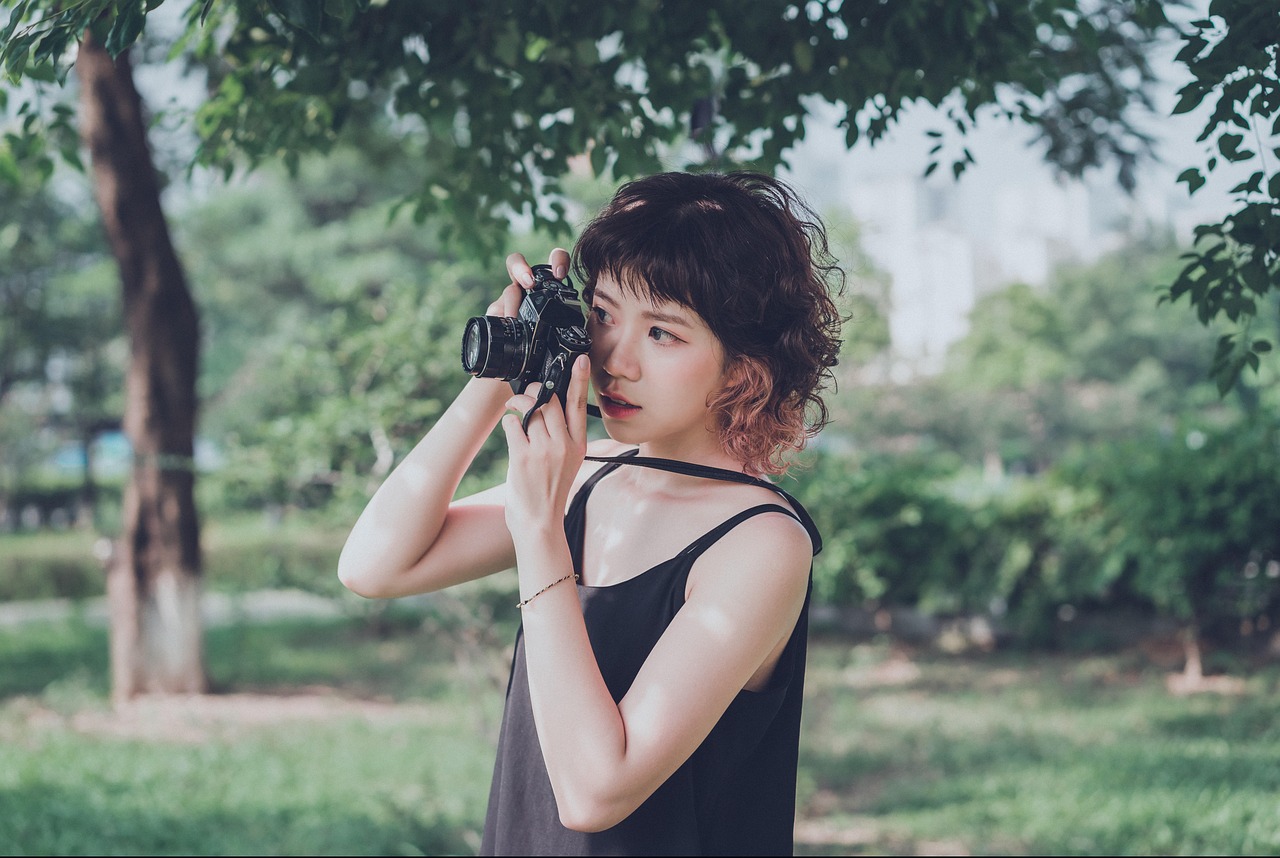
A face in full midday sun has its eyes in two dark sockets and its chin split by its own shadow. A white surface barely a meter away, just below the chin line and tilted upward, fixes that portrait. Which of the five surfaces you carry matters less than where you put it: the intensity of the bounce falls with the square of the distance, and the color of the fabric does not.
How far away do I put the reflector?
As close as the framing will tolerate. The same panel at two meters and at one meter does not differ by 50%: it differs by four times the light, two stops.
Translated into contrast: if at two meters the cheek in shadow measured three stops below the lit one (8:1, no detail in the shadow), at one meter it drops to one stop, 2:1, almost flat. The portrait you want is in the middle, around 1.5 stops.
Two caveats. At one meter, a one-meter panel is no longer a point source, so the real gain falls below the theoretical two stops. And the reflector is rarely the only fill light on that cheek: with sand or a light wall behind you, some was already there. Meter both cheeks in spot mode before and after moving the panel.
Working range: 0.6 to 1.5 m for close-ups and medium shots. Any closer and it enters the frame; beyond 2 m you will not see the difference in the histogram.
The five surfaces, one by one
Surface: White; What it does: Diffuse, low-intensity bounce; Color temperature: Neutral if the fabric is truly white; an off-white warms the bounce; When to use it: Portrait in sun or backlight, skin, any doubt; When it gets in the way: With light that is already weak: it has no strength to lift the shadow
Surface: Silver; What it does: Specular bounce, considerably more intense; Color temperature: Neutral, respects the source's cast; When to use it: Full-length shots, long distances, fashion with sparkle; When it gets in the way: Within two meters of the face in sun: it dazzles and the model squints
Surface: Gold; What it does: Warm, intense bounce; Color temperature: Clearly warm; demands a different balance from the background; When to use it: Scenes that are already warm: last light, dry leaves, ochre stone; When it gets in the way: Mixed light or a neutral background: no balance works for face and background at once
Surface: Black; What it does: Does not bounce, subtracts: it absorbs the ambient light that was filling the shadow; Color temperature: None, adds no cast; When to use it: Flat faces, very bright backgrounds, overcast, defining the jaw; When it gets in the way: Scenes that are already contrasty or shadows at the edge of noise
Surface: Translucent; What it does: Does not bounce: it is placed in between and enlarges the source; Color temperature: Almost neutral; some fabrics run warm, check with a gray card; When to use it: Hard, direct sun on the face, with no shade at hand; When it gets in the way: In wind, and if you have no one to hold it close by
What is a black reflector for?
For taking light away, which is half the craft. A black panel does not illuminate: it blocks the bounce that the surroundings were putting into the shadow side of the face. The face loses fill, the shadow sinks and the edge appears that separates cheek from cheekbone and chin from neck.
That fill from the surroundings is more than you think: on the beach, in snow or between two whitewashed buildings, the face receives light from almost every direction and comes out well exposed but completely flat. No camera setting fixes that.
Place it on the shadow side, parallel to the face and less than a meter away; the bigger and closer it is, the more it subtracts. How much depends on how much bounce there was: on light sand it jumps out on the histogram, in a dark stone alley you will notice nothing. Meter that cheek with the panel and without it.
Three cases where black beats white:
Wide or round face. Subtracting on the short side defines the jaw better than adding fill on the broad side.
Subject against a very bright background. White sky, whitewashed wall, sea at midday: the entire background fills the person, and black gives back the shadow that separates them.
Heavy overcast. The sky is a diffuser from horizon to horizon and white adds almost nothing. Black does.
What it costs: with the shadow already two or three stops down and a high ISO, sinking it further pushes it into noise. And in a room with dark walls it does nothing: there was no bounce to remove.
The diffuser between the sun and the face
A translucent panel between the sun and the face stops being a reflector: it becomes the source. The sun measures about half a degree of angular diameter, which is why its shadow has a knife edge; a one-meter panel at one meter from the face covers about 53 degrees of the subject's sky. You swap a tiny source for an enormous one and the shadow transition goes from a clean cut to a gradient several centimeters wide across the cheek: the difference between hard light and soft light, set up in two seconds.
What it costs in stops is not a fixed figure, and be wary of anyone who gives you one: it depends on the fabric and the layers, from a little under one stop to more than two in the dense ones. Measure it. In full sun, at f/4 and ISO 100, the sunny 16 rule calls for 1/1600 s on the face; if with the panel in place the meter drops to 1/400 s, that panel costs exactly two stops.
That loss has a side effect: the background is still in full sun. If the panel eats two stops, the background ends up two stops more blown out relative to the face; with sky behind, it goes white. Frame against something in shade or accept a bright background.
The other two costs are physical. The panel has to be close: at three meters it is angularly small again and the light, hard. And in wind it is a sail: without ballast, it ends up on the ground.
Why does gold ruin a mixed-light scene?
Because it returns warm light to a face placed in a scene with a different balance. You correct the face and the background, lit by neutral light, goes blue; you correct the background and the face comes out orange. A global white balance adjustment cannot serve two different temperatures, and fixing it forces local masks on every photo.
Gold wins when the entire scene is already warm: last light, dry leaves, sandstone, wood. With a clear midday or a gray urban background the conflict is certain; if your reflector is a 5-in-1, use the silver face and save the gold one for sunset.
How do I hold a reflector without an assistant?
With whatever is around, in order of reliability:
Light stand with a clamp or holding arm. Weigh down the base with your backpack: as soon as anything more than a breeze blows, a one-meter panel will topple a light stand.
The ground and your knees. Crouching, resting it on the ground and holding it between your knees, tilted upward.
A car's bodywork. Wedge it between the window and the frame; the white body of a van is already a two-meter reflector.
The subject themselves, holding it at chest height out of frame. It works in close-ups and fails as soon as you open up to a medium shot.
The height does not change with the support: upper edge below the chin, tilted 30 or 45 degrees toward the face. At waist height, pointing straight up, you get flashlight-under-the-chin light with the nostrils lit.
Homemade substitutes that work and ones that do not
They work: a sheet of white polystyrene or foam board, rigid and not rippling; a thin white bedsheet stretched as a diffuser; black card or a dark jacket over a chair as negative fill; the light wall you already have next to you.
They do not work: a mirror is a second sun, it returns a hard beam of its own size and dazzles the model; an A4 sheet of paper fills only when pressed against the face, because at one meter its area is too small; crumpled aluminum foil gives a mottled bounce that shows on the skin.
Two color warnings: kraft cardboard and light wood warm just like gold, and grass under the chin returns green to the skin. The guide to basic mastery of natural light explains how these bounces change.
Frequently asked questions
What size reflector do I need for portraits?
One of 80 to 110 cm covers a close-up and a medium shot well, which is where the bounce is noticeable. For a full-length shot it fills only the upper half, and that difference shows: what rules is the size relative to what you are lighting, not the absolute size.
Does a reflector work on an overcast day?
Barely: with an overcast sky the light arrives from the whole hemisphere and a white panel adds a minimal fraction. On overcast days black does more for the portrait, because it gives back a direction to a light that has none.
Reflector or fill flash?
The reflector needs a powerful source to bounce and something to hold it: it is the tool for sunny outdoors. The flash works in shade, indoors and at night, in exchange for batteries and having to respect the sync speed.
How do I keep the subject from squinting?
Swap silver for white and move the panel back to a meter and a half: silver at close range under midday sun is painful. The other way out is to turn the subject with their back to the sun and fill from the front.
What to put in the bag and what to leave at home
A white panel with a black reverse and a translucent diffuser solve almost all outdoor situations. Silver comes along for full-length shots or beyond two meters; gold, only if the entire scene is going to be warm.
The habit that saves the most photos costs no money: bring the panel closer until the shadow disappears and move it back until it shows again. That midpoint, with shadow but with detail, is the portrait.
The 44 cards from Enfogram have the distances, contrast ratios and settings for each lighting situation printed on them, so you can check them on the spot without letting go of the camera.