Silky Water: Long Exposure With an ND Filter
Long exposure water photography: which ND filter to use, how to calculate the new exposure and exact settings for waterfalls, rivers and silky sea.
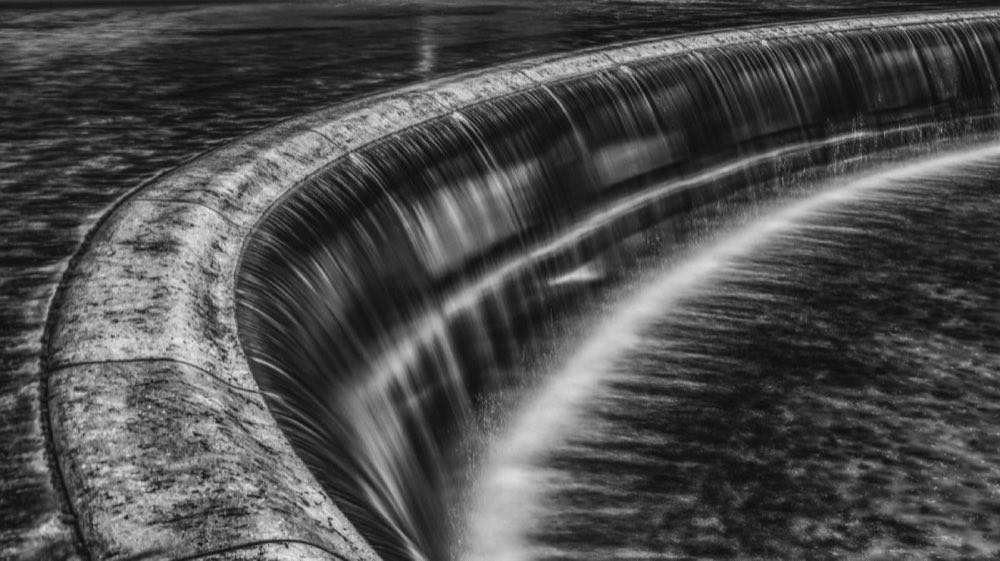
Long exposure water photography is probably the effect that pushes the most photographers to buy their first filter and their first serious tripod: waterfalls turned into silk curtains, seas transformed into mist and rivers flowing like smoke. The principle is simple (keep the shutter open long enough for moving water to blur) but doing it in daylight requires solving one problem: there is too much light.
That's where the neutral density (ND) filter comes in: a dark piece of glass that subtracts stops of light without altering color, allowing you exposures of seconds in full daylight.
This guide covers the complete process: which filter to choose, how to recalculate the exposure and the exact settings for each type of water.
Which ND filter you need (and which to buy first)
NDs are measured in the stops of light they block. The three useful ones for water:
ND8 (3 stops): turns 1/60 s into 1/8 s. Enough for waterfalls in shade or overcast days.
ND64 (6 stops): turns 1/60 s into 1 s. The most versatile: full silk in almost any condition.
ND1000 (10 stops): turns 1/60 s into 15 s. For misty sea and streaking clouds in full sun.
If you only buy one, make it the ND64: it covers waterfalls, rivers and sea with complete results, and late in the day it even reaches extreme effects.
Shutter speed is the central creative variable of this technique; if you want to master its whole range (from freezing droplets to dragging clouds), the guide to shutter speeds is the complete reference.
The right shutter speed for each effect
There is no "the" shutter speed for water: there is a range per aesthetic.
1/4 to 1/2 s: the water shows threads and texture, keeping a sense of movement. Ideal for powerful waterfalls and mountain rivers.
1 to 4 s: classic silk, smooth but with visible direction. The sweet spot for most waterfalls.
8 to 30 s: the sea becomes flat mist, individual waves disappear. Coastal minimalism.
1 to 4 minutes (Bulb): completely smooth surface and streaking clouds. Requires ND1000 and a remote release.
Practical rule: the faster and more powerful the water, the less time you need. A powerful waterfall softens at 1/2 s; a calm sea needs 30 s.
How to calculate exposure with the filter on
The field workflow, step by step:
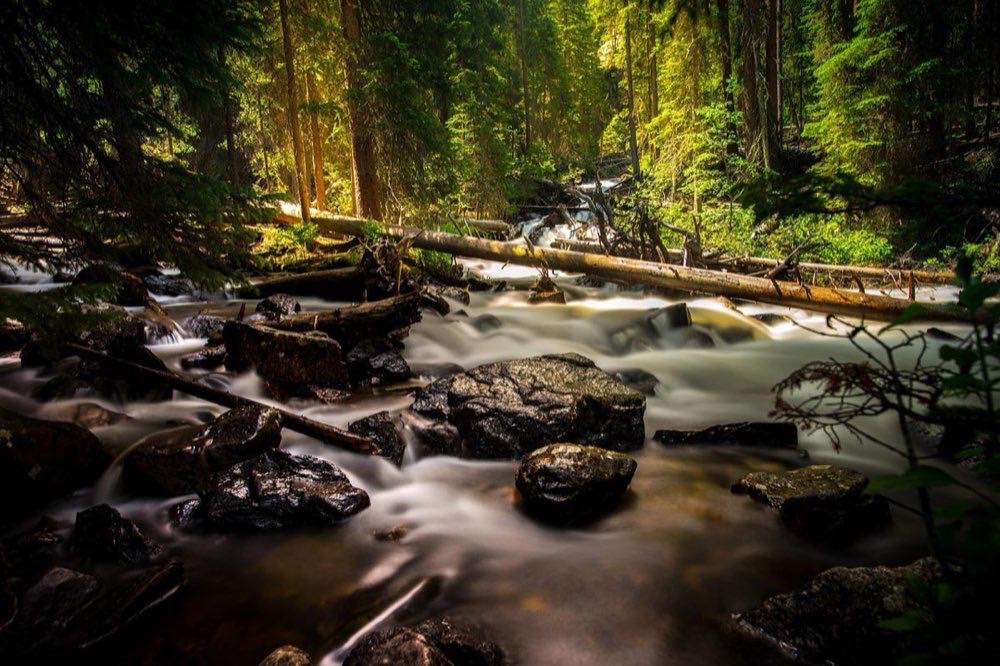
Compose and focus without the filter (with an ND1000 you can't see anything through the viewfinder). Switch to manual focus to lock it.
Meter the base exposure: for example f/11, 1/60 s, ISO 100.
Apply the filter factor: each stop doubles the time. With ND64 (6 stops): 1/60 → 1 s. With ND1000 (10 stops): 1/60 → 15 s.
Mount the filter, shoot and check the histogram: budget-range NDs often deviate by up to half a stop.
Doing this conversion in your head with 10 stops and times in seconds is error-prone. To avoid mistakes, calculate the exact exposure time with the ND filter calculator: you enter your base exposure and the filter, and it gives you the final time.
What settings do I use for each type of water?
Scene: Waterfall in forest (shade); Filter: ND8; Aperture: f/11; Shutter speed: 1/2 s; ISO: 100
Scene: Waterfall in full light; Filter: ND64; Aperture: f/11; Shutter speed: 1 s; ISO: 100
Scene: Mountain river with texture; Filter: ND8; Aperture: f/11; Shutter speed: 1/4 s; ISO: 100
Scene: Waves with wake on rocks; Filter: ND64; Aperture: f/11; Shutter speed: 2 s; ISO: 100
Scene: Misty sea at sunset; Filter: ND1000; Aperture: f/8; Shutter speed: 30 s; ISO: 100
Scene: Smooth sea and streaking clouds; Filter: ND1000; Aperture: f/8; Shutter speed: 120 s (Bulb); ISO: 100
The details that separate silk from disaster
Firm tripod, untouched: use a 2 s timer or a remote release. In long exposures, even pressing the button moves the camera.
Turn off the stabilizer: on a tripod, some stabilization systems introduce their own vibration.
Cover the viewfinder (on a DSLR): light entering through the eyepiece fogs long exposures.
Watch out for wind: the water will come out silky, but branches and grasses moved for 30 s come out blurry. Frame to minimize vegetation or accept the effect.
Protect the filter from spray: next to waterfalls, clean the filter between shots with microfiber; a single drop becomes a giant blotch.
A strong static element: silk works by contrast with perfectly sharp rocks, bridges or trunks. Without a static anchor, the photo is just haze.
A polarizer also helps: it removes reflections from water and wet rocks, saturates the green and, as a bonus, subtracts 1.5-2 stops. On when each filter is best, the article polarizer vs ND filter breaks it down. And if waterfalls are your main goal, in waterfalls: the exact shutter speed for each effect you'll find specific variations by type of drop.
Frequently asked questions
Can I make silky water without an ND filter?
In low light conditions, yes: in a shady forest or at dusk, with f/16 and ISO 100 you can reach 1/2 s or more. In full daylight it's impossible without a filter: even at f/22 and ISO 50 you won't go low enough, and f/22 degrades sharpness through diffraction.
Screw-in or square ND?
To start, screw-in: cheaper, compact and without holders. Square filters win when you combine ND + graduated filters or use several lenses of different diameters.
Why do my ND1000 photos come out with a color cast?
Budget NDs often introduce a magenta or brown cast in long exposures. Shoot RAW and correct it with white balance when developing, or invest in a filter with better optical quality.
What aperture is best for long exposure of water?
f/8 to f/11: maximum lens sharpness and wide depth of field. Avoid f/16-f/22 unless you desperately need more time; diffraction softens the image. If you need more time, it's cleaner to step up a filter than to stop down further.
The complete recipe, from base to shot
Silky water is a precise recipe: tripod, composition with a static anchor, base exposure metered without the filter, mathematical conversion of the time and vibration-free shooting. Once you've internalized the workflow, every waterfall becomes a ten-minute session with a guaranteed result.
Start with an ND64, the table in this article and a nearby waterfall: the learning curve is a single afternoon. At Enfogram you have the 44 photography cards with the exact settings for every situation, long exposure included: print them, carry them with you and shoot with confidence.