Skip to content
← Glossary

Long exposure

Long exposure uses slow shutter speeds, from one second to several minutes, to record the passage of time in a single image.

Also known as: slow shutter, time exposure
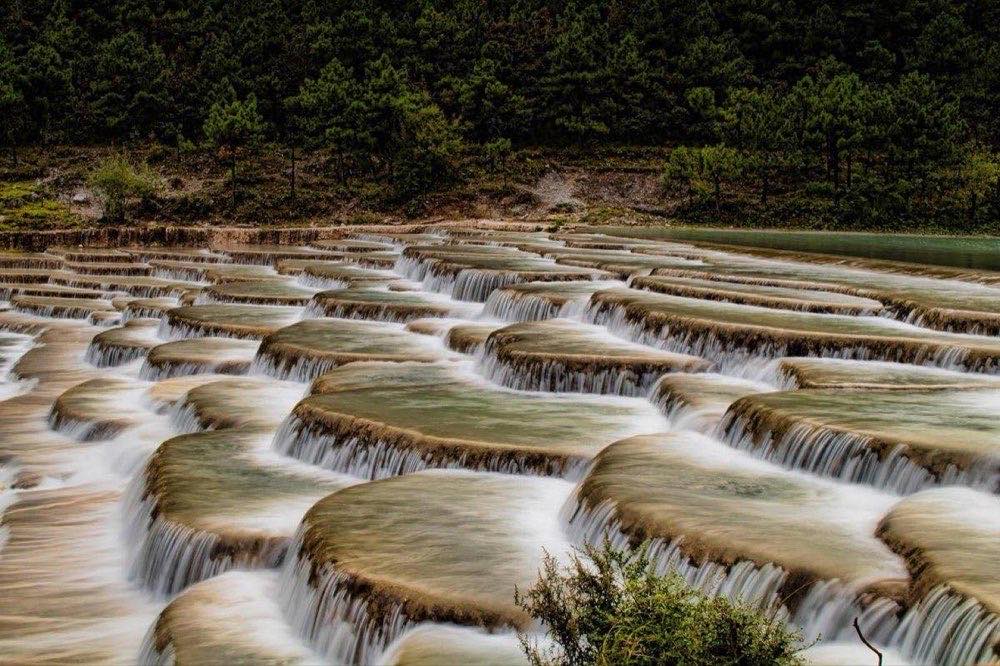
Silky water achieved with a long exposure

Long exposure is a technique that uses slow shutter speeds —from one second to several minutes— to record the passage of time in a single image. Movement that happens during the exposure turns into trails or smoothed surfaces: water becomes silk, clouds stretch into streaks, car headlights leave lines of light, and moving people disappear.

It requires a tripod (any vibration ruins the sharpness of the static areas) and, in broad daylight, an ND filter so you can use slow speeds without overexposing.

It is applied both by day (with ND filters) and by night (taking advantage of the little natural light). For the complete daytime process, see daytime long exposure: complete step by step and the guide to shutter speeds.

  • Blog
    Manual Mode vs Aperture Priority: Which Should You Use?

    Manual mode or aperture priority: when each makes sense, with real scenarios, concrete settings and the myth of manual as the pro's mode, debunked.

  • Glossary
    Color temperature (Kelvin)

    Color temperature describes whether a light source leans orange or blue, measured in Kelvin (K). Low values are warm light and high values are cool light.

  • Guide
    Exposure in Complex Landscapes

    Landscapes pose the biggest dynamic range challenge: your sensor can't capture everything you see, so you must decide which tones to preserve.

  • Blog
    Shutter Speed: Exposure and Motion

    Shutter speed: which value freezes or blurs each kind of movement, with a table by scenario and the most common mistakes.

  • Glossary
    Shooting modes (P, A, S, M)

    The shooting modes on the dial split control of the exposure between you and the camera: program, aperture priority, shutter priority and manual.

  • Guide
    Exposure Compensation: How and When to Use It

    Exposure compensation lets you make a photo come out lighter or darker than the reading your camera calculates automatically.

  • Guide
    Exposure in Complex Landscapes

    Landscapes pose the biggest dynamic range challenge: your sensor can't capture everything you see, so you must decide which tones to preserve.

  • Guide
    Exposure Compensation: How and When to Use It

    Exposure compensation lets you make a photo come out lighter or darker than the reading your camera calculates automatically.

  • Guide
    HDR Techniques and Exposure Blending

    HDR isn't a filter: it's a technique for capturing the full range of highlights and shadows your eye sees but your camera can't record at once.

  • Guide
    Shutter Speeds

    Shutter speed controls light and motion: there is no universal correct speed, it depends on your artistic intent.

  • Guide
    Smart ISO: Choosing the Right ISO

    ISO adapts the camera to the available light while keeping your creative priorities: use the ideal ISO for each situation, not always the lowest.

  • Guide
    The Exposure Triangle, Step by Step

    The exposure triangle is the basis of light control: ISO, aperture and shutter speed work together as a balancing system.